
10
Dec
Over 80 percent of people struggle to distinguish genuine leather from mass-produced alternatives, especially when shopping for an American bag. Knowing what sets top quality leather apart can help you avoid disappointment and wasted money. By understanding subtle differences in material, craftsmanship, and authenticity standards, you gain the confidence to spot a truly exceptional leather bag that reflects real value and style.
Table of Contents
- Step 1: Prepare By Researching Leather Types And Manufacturing Origins
- Step 2: Examine The Leather For Texture, Scent, And Finish
- Step 3: Inspect Stitching, Edges, And Hardware For Craftsmanship
- Step 4: Test Flexibility And Weight For Durability
- Step 5: Verify Authenticity With Labels And Documentation
Quick Summary
| Key Point | Explanation |
|---|---|
| 1. Know leather types and quality | Understanding leather types, from full grain to bonded, is crucial for identifying quality leather items. |
| 2. Evaluate texture and smell | Authentic leather has a unique texture and rich smell that differentiate it from synthetic materials. |
| 3. Inspect stitching and edges | Quality bags feature consistent stitching and well-finished edges, indicating superior craftsmanship. |
| 4. Assess flexibility and weight | Genuine leather bags should feel supple and have a balanced, substantial weight, unlike synthetics. |
| 5. Verify labels and documentation | Always check interior labels and any accompanying documentation to confirm authenticity and quality. |
Step 1: Prepare by researching leather types and manufacturing origins
Learning to spot a quality leather bag starts with understanding its fundamental characteristics. Your journey begins by delving into the intricate world of leather types and manufacturing processes, which serves as the critical foundation for identifying superior leather goods.


Leather comes in multiple varieties, each with unique attributes that impact its quality, durability, and aesthetic appeal. Full grain leather represents the highest quality, featuring the entire hide with natural markings intact, while top grain leather offers a more refined surface after slight surface modifications. Genuine leather and bonded leather sit at the lower end of the quality spectrum, often composed of leather scraps compressed together.
When researching manufacturing origins, focus on regions renowned for exceptional leather craftsmanship like Italy, France, and the United States. These locations have established reputations for meticulous tanning processes and generations of leather working expertise. Pay attention to details such as leather thickness, tanning method, and finishing techniques. A professional tip: authentic high quality leather should feel supple, have a rich natural smell, and show subtle imperfections that demonstrate its genuine organic origin.
By thoroughly understanding these foundational elements, you are now prepared to advance to the next stage of identifying exceptional leather bags with a discerning eye.
Step 2: Examine the leather for texture, scent, and finish
Now that you understand leather types, it is time to evaluate a bag by engaging your senses and scrutinizing its physical characteristics. Expert leather assessments reveal specific techniques for identifying genuine quality that go far beyond superficial appearances.
Texture plays a critical role in determining leather quality. Authentic high grade leather will feel smooth yet substantial, with natural variations that indicate genuine material. Run your fingers across the surface and note its responsiveness. Full grain leather typically displays subtle imperfections like minor wrinkles or grain patterns that demonstrate its organic origins. Synthetic or low quality leather often feels unnaturally uniform or plasticky, lacking the nuanced texture of premium materials.
The olfactory test provides another sophisticated method of evaluation. Genuine leather emits a distinctive rich smell reminiscent of natural hide slightly earthy and warm. Artificial leather or synthetic materials typically smell like chemicals or plastic. When examining a potential purchase, take a moment to smell the bag discreetly. A high quality leather item will have an organic aroma that distinguishes it from mass produced imitations.
Finally, observe the bag’s finish. Premium leather should have a consistent color depth with slight variations that suggest natural processing. Look for clean edges, even coloration, and minimal surface imperfections that indicate skilled craftsmanship. Your goal is finding a leather bag that not only looks beautiful but feels authentic in every sensory dimension.
Step 3: Inspect stitching, edges, and hardware for craftsmanship
As you continue evaluating a leather bag, your attention now turns to the critical details that separate exceptional craftsmanship from mediocre manufacturing. Expert techniques for identifying high quality leather accessories reveal that precision in construction speaks volumes about a bag’s overall quality.
Stitching represents the backbone of leather bag durability. Look for consistent thread tension with straight, uniform lines that show no signs of wavering or irregular spacing. Professional craftsmen create stitches that are tight and even, with threads that match the leather color or intentionally contrast for aesthetic purpose. Run your finger along the seams and check for any loose threads or uneven sections. High quality bags feature reinforced stress points like handles and corners, where multiple lines of stitching provide additional structural integrity.
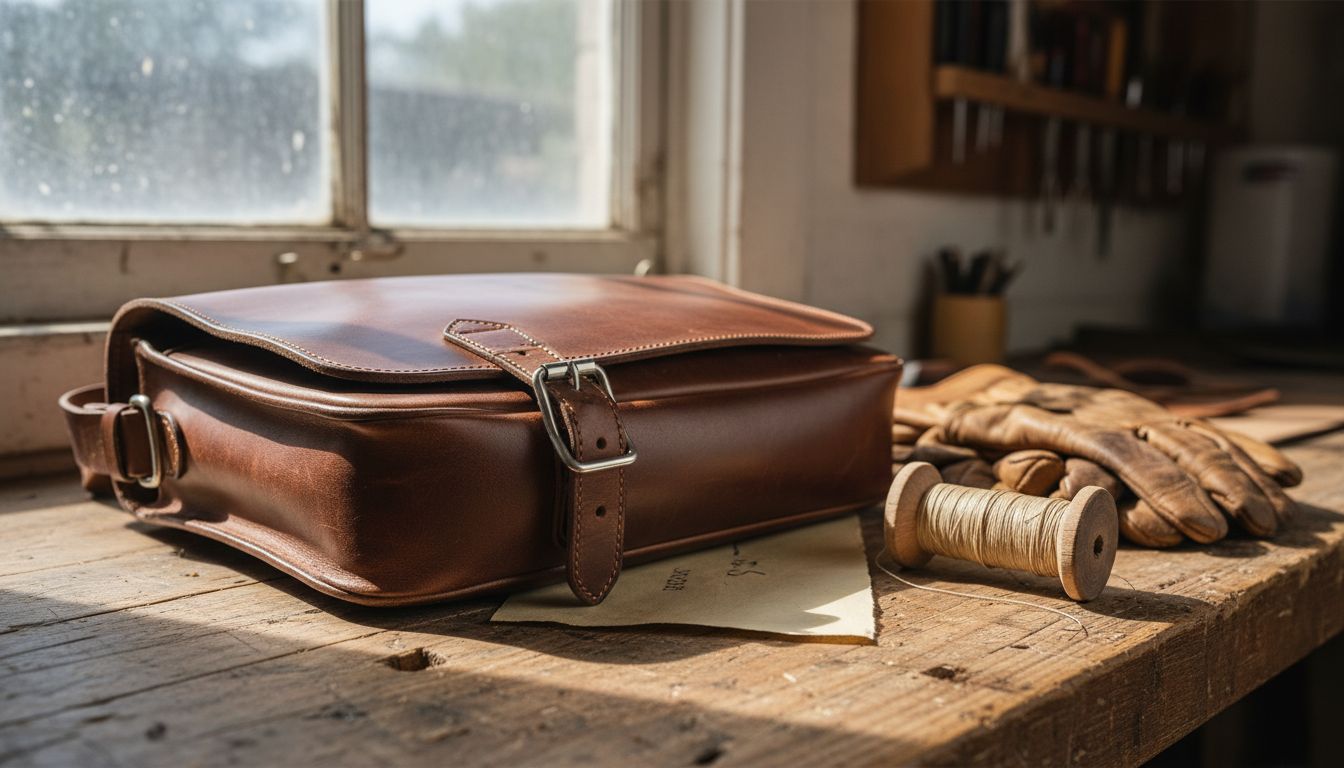
Edge finishing distinguishes superior leather goods from mass produced alternatives. Premium leather bags feature edges that are carefully sealed, folded, or burnished to prevent fraying and enhance longevity. The edges should appear smooth and clean without rough or uneven surfaces. When you examine the bag’s edges, they should feel refined and deliberately treated, demonstrating the manufacturer’s commitment to detail.
Hardware serves as the final indicator of craftsmanship. Zippers, clasps, and metal attachments should feel substantial and move smoothly without catching or requiring excessive force. Look for hardware made from solid metals like brass or stainless steel, with smooth mechanisms and secure attachments. Quality hardware should not feel lightweight or flimsy but should complement the bag’s overall construction with a sense of purposeful design.
Step 4: Test flexibility and weight for durability
As you progress in your leather bag assessment, understanding the bag’s physical characteristics becomes paramount. Authentic leather bags possess unique weight and flexibility properties that distinguish them from synthetic alternatives.
Flexibility serves as a critical indicator of genuine leather quality. High grade leather should feel supple and responsive when gently manipulated. Pick up the bag and fold a small section authentic leather will bend smoothly without cracking or maintaining sharp creases. Premium full grain leather demonstrates a natural suppleness that synthetic materials cannot replicate. When you bend the leather, observe how it responds genuine leather will show subtle wrinkles and maintain its structural integrity, reflecting its organic origins.
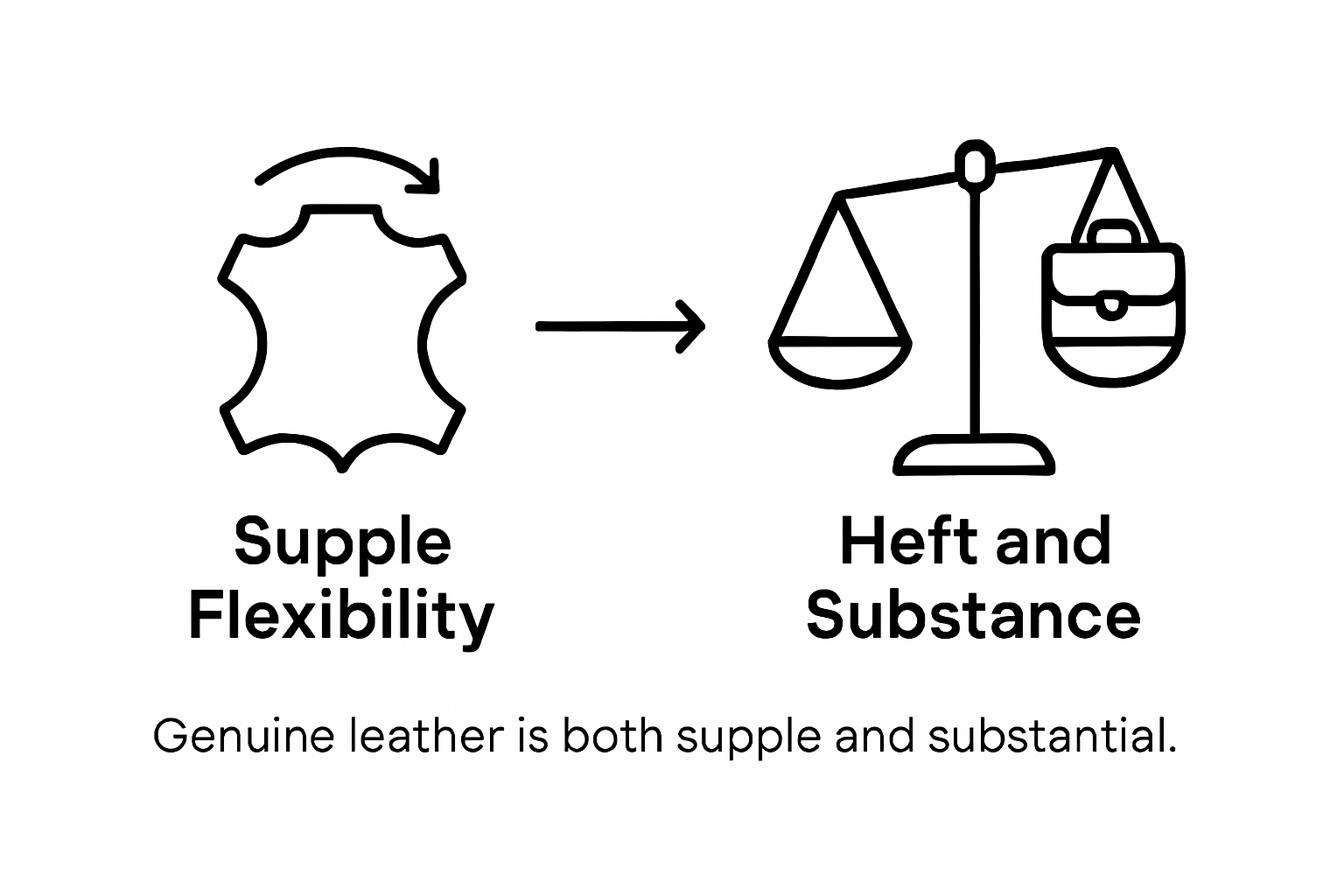
Weight provides another crucial insight into leather authenticity and quality. Genuine leather bags have a substantive feel that communicates durability and craftsmanship. The bag should feel balanced and solid without being excessively heavy. Lift the bag and assess its weight distribution high quality leather will have a consistent density that feels premium to the touch. Synthetic or low quality leather often feels unnaturally light or unevenly distributed, lacking the substantial feel of genuine material.
Remember that these tactile tests work in combination with your previous visual and sensory assessments. By carefully evaluating flexibility and weight, you are refining your ability to distinguish exceptional leather bags from mediocre imitations.
Step 5: Verify authenticity with labels and documentation
With your sensory assessment complete, the final step involves decoding the technical details that validate a leather bag’s genuine quality. Understanding manufacturer labeling and authenticity markers provides crucial insights into the bag’s true origins and construction.
Examine the bag’s interior labels with a critical eye. Authentic leather bags feature detailed information including leather type classification like full grain, top grain, or genuine leather. These terms are not interchangeable full grain represents the highest quality, featuring the hide’s complete surface with natural markings intact. Top grain leather indicates a surface that has been slightly refined, while genuine leather often represents lower quality compressed leather materials. Professional craftsmanship means these labels will be precisely printed, with clear typography and consistent formatting.
Documentation serves as another critical authentication method. Legitimate leather bags typically include certificates of authenticity, origin tags, or manufacturer serial numbers. These documents provide verifiable proof of the bag’s craftsmanship and material quality. Pay attention to holographic seals, embossed maker marks, or unique identifiers that distinguish genuine products from counterfeits. A reputable manufacturer will provide transparent documentation that tells the story of your bag’s creation.
Remember that combining these documentation checks with your previous sensory assessments creates a comprehensive approach to identifying a truly exceptional leather bag. Your meticulous evaluation ensures you are investing in a product of genuine quality and lasting value.
Discover Authentic Elegance With Confidence
Spotting a quality leather bag requires knowing the right cues like genuine texture, craftsmanship, and authenticity markers. If you want to move beyond guesswork and invest in bags that truly reflect durability and timeless style you deserve the assurance of expertly crafted products. At Baggizmo, we understand your desire to find leather bags that combine original design and lasting value without compromise.
Explore our Fashion Archives for a curated selection of stylish leather bags crafted in the European Union that meet your standards for texture, stitching, and genuine materials. With limited edition pieces and pre-order discounts available now you can own exclusive designs made to last. Start your journey toward owning authentic quality by shopping the full collection at Baggizmo Shop. Don’t wait to experience the difference great craftsmanship makes—visit us today and select your next quality leather bag.
Frequently Asked Questions
How can I identify high-quality leather types?
Understanding leather types is key to spotting quality leather bags. Look for full grain leather, which retains the hide’s natural imperfections and offers the best durability. Familiarize yourself with the characteristics of top grain, genuine, and bonded leather, as these indicate varying quality levels.
What sensory aspects should I evaluate in a leather bag?
When assessing a leather bag, focus on texture, scent, and finish. Authentic leather will feel smooth yet substantial and have a rich, organic smell. Observe the bag’s finish for consistent color depth and natural variations that suggest quality craftsmanship.
How do I check the stitching and edges for craftsmanship?
Examine the stitching and edges closely, looking for tight, even stitches without loose threads. High-quality bags have well-finished edges that are smooth and often sealed to prevent fraying. Run your fingers along seams to ensure they meet professional standards of durability and aesthetics.
What flexibility and weight characteristics indicate genuine leather?
Genuine leather should feel supple and hold its shape without cracking when flexed. Assess the bag’s weight; high-quality leather bags feel substantial and balanced, not excessively light or uneven. Lift and fold sections of the bag to gauge its flexibility and responsiveness.
What should I look for in authenticity labels and documentation?
Authentic leather bags will feature specific labels indicating the leather type, such as full grain or top grain. Check for detailed documentation, like certificates of authenticity or unique serial numbers, to validate the bag’s craftsmanship. Ensure labels are clear and professionally printed to confirm their legitimacy.
Recommended
- Why Choose Leather Bags: Style, Durability, Impact
- Leather Archives – Baggizmo
- Why Italian leather never goes out of style
- Why You Need a Men’s Leather Crossbody Bag in Your Life
- How to Identify Quality Perfume: A Step-by-Step Guide
Need an everyday carry bag?
Meet Baggizmo Crossbody — built for daily essentials, close and secure.


