
24
Jan
Finding the perfect accessory can turn daily routines into moments of self-expression, especially when you rely on items that work as hard as you do. With urban life demanding both durability and style, the true value of leather accessories comes into focus for the European professional. Understanding what sets authentic leather apart—and clearing up common myths—empowers you to choose stylish pieces that stand up to commuting, meetings, and city adventures without sacrificing your personal flair.
Table of Contents
- Defining Leather Accessories And Common Myths
- Types Of Leather Used In Accessories
- Key Features: Durability, Style, And Function
- Sustainability And Ethical Sourcing In Leather
- Comparing Leather To Other Materials
- Caring For Leather: Maintenance And Longevity
Key Takeaways
| Point | Details |
|---|---|
| Understand Leather Grades | Familiarize yourself with different leather grades—full-grain, top-grain, and genuine—to make informed purchasing decisions that ensure longevity. |
| Sustainability Matters | Investigate the sourcing and tanning methods of leather accessories to support environmentally responsible practices. |
| Maintenance is Key | Regular simple maintenance, like conditioning and proper storage, can significantly extend the lifespan of leather products. |
| Evaluate Cost-Effectiveness | Consider the long-term cost of leather accessories versus synthetic alternatives to determine overall value and sustainability. |
Defining Leather Accessories and Common Myths
Leather accessories span far beyond the jacket hanging in your closet. When we talk about leather accessories, we’re referring to items crafted from animal rawhide and skin that has undergone tanning to become durable and flexible. This includes wallets, belts, messenger bags, phone cases, straps, and desk organizers that make up the functional core of a modern urban professional’s daily carry. In European cities, these pieces aren’t just practical—they’re cultural statements that communicate intentionality and personal style. The distinction matters because understanding what leather actually is helps you make informed choices about which accessories deserve space in your wardrobe and which will genuinely last through years of commuting, client meetings, and weekend adventures.


Here’s where myths start causing real problems for consumers. Myth 1: All leather is the same. This one costs people money. Leather grades vary significantly, from full-grain leather (the highest quality, showing natural markings and aging beautifully over time) to genuine leather (which sounds authentic but is actually the lowest quality grade, made from scraps bonded together). Top-grain leather sits in the middle, offering durability without the premium price tag. When you see a bag marketed simply as “leather” without specification, you’re likely looking at genuine grade, which will crack and peel within months. Myth 2: Leather is inherently bad for the environment. This oversimplifies a complex reality. Traditional tanning does create environmental concerns, but modern sustainable practices and vegetable tanning methods significantly reduce that impact. Understanding sustainable leather production helps you align your purchases with your values. Myth 3: Leather requires constant, expensive maintenance. In reality, quality leather improves with age and minimal care. A simple wipe-down with a damp cloth monthly and occasional conditioning prevents most damage.
The reason these myths persist is that leather marketing often intentionally obscures grade distinctions. A €50 bag and a €300 bag might both claim to be “genuine leather,” but their lifespan and appearance will differ dramatically. When you’re investing in accessories for a professional lifestyle, knowing how to evaluate quality before purchase prevents buyer’s remorse. The material’s historical significance as a symbol of craftsmanship and status hasn’t changed—but the market has fragmented in ways that make education your only protection against mediocre products.
Pro tip: Always ask for specific leather grade information (full-grain, top-grain, or genuine) before purchasing, and inspect the product’s edges and seams for signs of quality tanning and construction.
Types of Leather Used in Accessories
Not all leather feels the same or performs the same. The type you choose directly impacts how your accessory looks today and whether it’ll still function five years from now. Understanding different leather types and their characteristics helps you make purchases aligned with your lifestyle and budget. The hierarchy starts with full-grain leather, which retains the natural grain pattern and all surface characteristics of the original hide. This is the gold standard for accessories because it develops a rich patina over time, actually improving in appearance as you use it. Full-grain leather shows scratches and marks, but these become part of its story rather than flaws. Top-grain leather sits one step down, offering a more uniform appearance because the surface has been sanded and refinished. It’s slightly less durable than full-grain but still exceeds the longevity of lower grades. The trade-off is aesthetic control—you get consistency but lose some of that authentic, lived-in character that full-grain develops.
Below these sit split leather and suede, which come from lower layers of the hide and offer less durability. Suede feels luxurious and looks stunning initially, but it stains easily and doesn’t withstand daily professional use well. This is why European professionals rarely invest in suede wallets or everyday messenger bags. The tanning process matters equally. Chrome tanning speeds up production and creates softer, more flexible leather that’s ideal for bags and straps. Vegetable tanning takes longer but produces leather that ages beautifully and has a lower environmental footprint. Vegetable-tanned leather feels stiffer initially but softens with use and can last decades. For urban professionals buying an investment piece, vegetable-tanned full-grain leather is the ultimate choice. Emerging alternatives like lab-grown or bio-based leathers address ethical concerns, though they don’t yet match traditional leather’s durability and aging characteristics for accessories meant to last.
The practical reality is this: a full-grain leather wallet from Baggizmo might cost more upfront, but it’ll outlast three cheaper alternatives while looking better the whole time. When comparing accessories, always ask whether you’re getting full-grain or top-grain, and which tanning method was used. This single conversation prevents expensive mistakes and ensures your accessories actually match your investment level and professional needs.
Here’s a comparison of common leather grades and their suitability for accessories:
| Leather Grade | Durability | Appearance | Typical Use Cases |
|---|---|---|---|
| Full-grain | Extremely high | Rich patina, natural marks | Premium wallets, bags |
| Top-grain | High | Smooth, more uniform | Mid-range belts, organizers |
| Genuine leather | Moderate to low | Artificially smooth | Budget handbags, phone cases |
| Suede | Low | Soft, velvety | Occasional-use items |
Pro tip: Feel the leather before purchasing—full-grain should feel natural and slightly textured, while top-grain feels smoother but less organic, helping you verify quality claims on the spot.
Key Features: Durability, Style, and Function
Why do investment-grade leather accessories command premium prices? The answer lies in three interconnected qualities that separate legitimate leather products from cheap alternatives. Durability tops the list because leather, unlike synthetic materials, improves under stress rather than degrading. Leather’s natural collagen fiber structure creates tensile strength and resistance to tearing that synthetic materials simply cannot replicate. A quality leather messenger bag used daily in your commute doesn’t weaken after six months. Instead, it develops character through creases and scuffs that actually enhance its appearance. Full-grain leather and vegetable-tanned varieties often last decades with minimal maintenance, turning a €300 investment into something you’ll pass down. Water resistance and abrasion resistance mean your wallet survives years of friction in your back pocket, your bag withstands constant laptop transitions, and your belt adapts to actual daily wear rather than degrading.
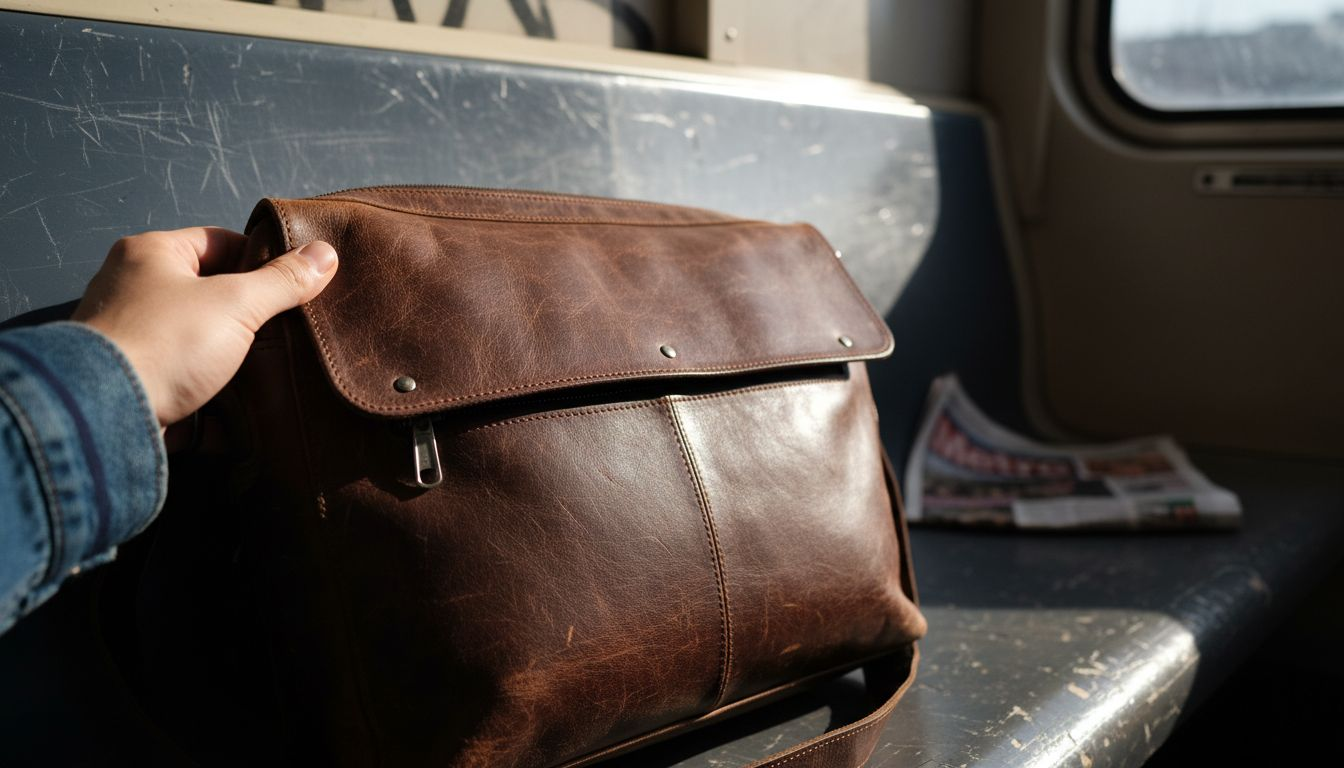
Style is where leather separates itself from pure functionality. Leather accessories possess an inherent sophistication that fabric simply cannot achieve. A polished leather briefcase communicates professionalism in ways that canvas never will. But the real magic happens over time. Leather ages gracefully, developing a unique patina that becomes more visually striking with each year of use. That weathered quality you admire on vintage leather pieces? You can actually create that intentionally through daily use. The natural color variations in full-grain leather mean your accessory becomes genuinely unique. No two leather wallets age identically. This is why European professionals choose leather repeatedly—it’s one of the few materials that looks better ten years in than when purchased.
Function completes the trinity. Leather provides thermal insulation and moisture permeability that keeps your contents protected while remaining breathable. A leather bag holds shape better than fabric alternatives, meaning your organizational system stays intact. The material’s flexibility allows it to conform to how you actually use it rather than imposing rigid limitations. Leather belts adjust to your body without permanent creasing. Leather straps soften where you grip them most. Contrast this with synthetic alternatives that either stay stiff or degrade into cracking plastic. When you purchase leather accessories, you’re buying something that adapts to your life rather than fighting against it.
The combination of these three qualities explains why leather accessories remain status symbols across cultures. You’re not paying for a logo or brand name. You’re paying for material science that actually works better the more you use it. When shopping for pieces meant to last through your entire professional journey, leather durability, style evolution, and functional superiority make the decision clear.
Pro tip: Check for leather smell before buying—genuine leather has a distinctive, slightly earthy odor that synthetics cannot replicate, serving as your fastest authenticity verification in a showroom.
Sustainability and Ethical Sourcing in Leather
The leather industry carries a reputation problem. Conversations about sustainability often pit leather against synthetic alternatives, suggesting that plastic-based materials represent progress. This oversimplifies reality. The actual story is more nuanced and, frankly, better news for conscientious consumers. Modern leather production increasingly adopts socially and environmentally responsible manufacturing practices that address both environmental impact and worker welfare. The key distinction lies in sourcing transparency and production methods. Quality leather manufacturers increasingly source hides as by-products of meat production, meaning the animal was raised for food first and the hide represents efficient resource use rather than wasteful byproduct disposal. This circular economy approach differs fundamentally from creating animals solely for leather.
Tanning methods have evolved dramatically. Traditional chrome tanning, while still common, created significant pollution in regions lacking environmental regulation. Vegetable tanning, increasingly popular among premium brands, uses natural tannins from tree bark and poses minimal environmental risk. Some innovative producers now employ combination methods that balance production efficiency with environmental responsibility. When you purchase leather from manufacturers prioritizing these methods, you’re not supporting an inherently destructive industry. You’re supporting companies making deliberate choices to reduce their environmental footprint. Research into sustainability practices reveals consumer demand for responsible products aligns with increasing industry innovation in reducing waste and improving transparency across supply chains.
The vegan leather alternative presents an uncomfortable truth. Synthetic leather typically relies on polyester or polyurethane plastic bases that don’t biodegrade and shed microplastics throughout their lifespan. Genuine leather biodegrades completely. Vegan leather markets itself as ethical but often creates worse environmental damage than the material it replaces. Meanwhile, ethical leather sourcing addresses legitimate social concerns. Worker safety, fair wages, and diversity in leather manufacturing remain under-researched areas, but responsible producers increasingly prioritize these dimensions alongside environmental metrics. European leather manufacturers, in particular, operate under stricter regulations that mandate worker protections and waste management standards.
When shopping for leather accessories, authenticity matters more than marketing claims. Ask manufacturers directly about their tanning methods, hide sourcing, and worker conditions. Reputable European producers answer these questions openly because they’ve invested in genuine sustainability practices. You can feel confident choosing leather when it comes from transparent sources using vegetable tanning or modern low-impact chrome alternatives. Your investment in quality leather actually represents a more sustainable choice than repeatedly replacing cheap synthetic alternatives that deteriorate within months.
Pro tip: Request product certifications like Leather Working Group ratings when available—these third-party standards verify actual environmental impact rather than relying on company marketing claims alone.
Comparing Leather to Other Materials
The market floods you with options. Canvas, nylon, polyester, faux leather, vegan leather, recycled synthetics, mycelium leather, lab-grown alternatives. Each claims superiority. Yet when you cut through marketing noise, the technical reality remains consistent. Leather’s multilayer structure combines a tight surface layer and varying density within, imparting unmatched strength, flexibility, durability, and aesthetic qualities that no current substitute fully replicates. This isn’t opinion. It’s material science. Comparative studies across the industry show that while certain alternatives excel in specific attributes, leather remains superior in overall technical performance for accessories. Synthetic materials may resist water better initially, but they crack under stress where leather bends and adapts. Canvas offers structure but lacks the aging characteristics that make leather more beautiful over time. Nylon is lightweight but degrades under UV exposure while leather actually improves in sunlight.
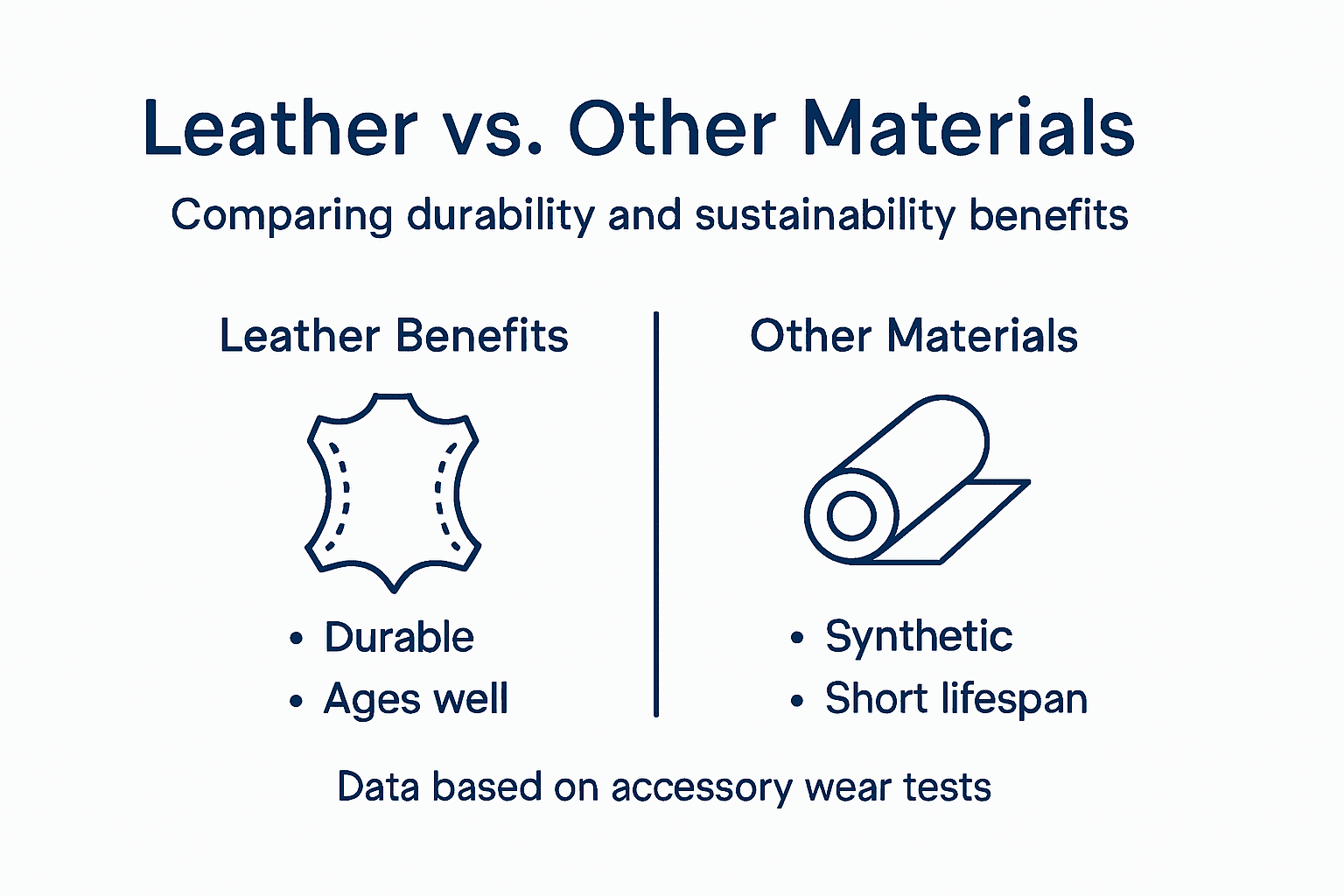
The emerging alternative materials deserve honest assessment. Plant-based leathers like mycelium and bacterial cellulose show genuine promise and represent exciting innovation. Lab-grown leather technologies could theoretically solve ethical concerns while maintaining performance. Yet current reality shows these alternatives generally fall short of the mechanical robustness and durability of animal leather for everyday accessories. They excel for specific applications like upholstery or shoe uppers but struggle with the sustained stress that daily professional use demands. You cannot order a mycelium leather wallet today and expect it to function identically to full-grain leather for five years of constant use. The technology isn’t there yet. Faux leather, meanwhile, poses particular challenges. Most faux leather relies on polyurethane or PVC plastic bases derived from fossil fuels. It degrades faster than genuine leather, creating more frequent replacement cycles and greater total environmental impact. You end up discarding synthetic accessories multiple times before a single leather piece would need replacing.
Here’s the distinction that matters for your purchasing decisions. Leather accessories represent a long-term investment where the material improves through use. Synthetic alternatives offer short-term functionality before degradation forces replacement. When you calculate true cost of ownership across years, leather wins economically and environmentally. The professional who carries the same leather messenger bag for 15 years outperforms someone replacing synthetic bags every 2 to 3 years. Your commitment to buying quality leather actually reduces your overall consumption and environmental footprint. This explains why European professionals remain loyal to leather despite availability of alternatives. They’ve learned through experience that initial cost differences vanish when durability matters.
Pro tip: When comparing materials, calculate cost per year of use rather than initial price—a €400 leather bag lasting 10 years costs €40 annually, while a €80 synthetic bag lasting 1.5 years costs €53 annually.
Caring for Leather: Maintenance and Longevity
Here’s what separates people who get 15 years from a leather bag versus those who replace theirs every 3 years: maintenance discipline. Not complicated maintenance. Just consistent, simple care that prevents damage before it starts. Preventive conservation emphasizes controlling environmental factors such as humidity, temperature, light exposure, and pollutants to prevent damage like drying, cracking, or mold. This principle applies equally to museum leather conservation and your everyday professional accessories. Think of it this way: your leather messenger bag sits in air conditioning all day, gets exposed to occasional sunlight during commutes, and sometimes encounters coffee spills. Each of these stresses the material. But when you control these factors proactively, leather doesn’t just survive—it thrives. Start with your storage environment. Keep leather accessories away from direct sunlight and heat sources like radiators. Avoid excessively humid spaces (above 65 percent humidity) and dry environments (below 30 percent humidity). Your office desk or bedroom closet typically offers ideal conditions. When traveling, pack leather items in cloth bags rather than plastic, allowing the material to breathe.
Daily maintenance requires minimal effort but maximum consistency. Wipe your leather wallet or bag with a soft, dry cloth once weekly to remove dust and surface oils that accumulate from handling. This single habit prevents dirt from embedding into the grain. Monthly, use a leather conditioner appropriate to your leather type, applying a small amount with a soft cloth and buffing away excess. Conditioning maintains the material’s natural moisture and flexibility, preventing the drying that leads to cracks. Think of it like moisturizing your skin—the leather needs hydration to remain supple. Avoid water damage by treating your leather with a quality water protectant spray annually. This creates a protective barrier without altering the leather’s appearance. When spills happen, blot immediately with a dry cloth rather than rubbing. For water stains, allow the leather to dry naturally at room temperature, never forcing drying with heat.
Storage deserves specific attention. Never fold leather accessories tightly or store them in compressed spaces where creasing becomes permanent. Use dividers in drawers to prevent your bags from resting against other items. Stuff larger bags with acid-free paper to maintain shape during storage periods. If your leather accessory begins showing wear, professional conditioning or restoration often revives the material completely. A leather expert can address color fading, minor scuffs, and moisture damage far more affordably than replacing the piece entirely. This is why investing in quality leather makes economic sense. The material’s repairability means your accessories can be renewed rather than discarded. European leather craftspeople maintain traditions of leather restoration that extend accessory lifespans far beyond what most consumers expect possible.
This table highlights maintenance actions and their impact on leather accessory lifespan:
| Maintenance Action | Frequency | Benefit for Longevity |
|---|---|---|
| Dry cloth wipe-down | Weekly | Prevents grain dirt buildup |
| Conditioning | Monthly | Maintains suppleness, prevents cracks |
| Water protectant use | Annually | Shields from moisture damage |
| Proper storage | Continuous | Prevents permanent creasing |
Pro tip: Keep a small cloth and conditioner in your office drawer for quick maintenance during work—regular touchups prevent leather damage accumulation that requires expensive professional restoration later.
Elevate Your Style with Durable and Sustainable Leather Accessories
Understanding the true value of leather accessories means recognizing their unmatched durability, evolving style, and positive environmental impact. If you are tired of replacing cheap synthetic bags or wallets that crack and fade quickly you deserve to invest in quality full-grain or vegetable-tanned leather that improves with every use. Our curated collection at Baggizmo offers thoughtfully designed, European-crafted pieces that combine sophisticated style with long-lasting function for your professional and everyday needs.
Explore our exclusive range in the Fashion Archives and Design Archives to find limited edition leather wallets, messenger bags, and accessories that embody timeless appeal and eco-conscious sourcing. Do not settle for less when you can enjoy sustainable luxury that stands up to daily wear and only becomes more distinctive over time. Upgrade your accessories today and experience the confidence that comes from carrying pieces meant to last a lifetime. Visit Baggizmo shop now and choose true craftsmanship that respects your style and the planet.
Frequently Asked Questions
What are the main benefits of using leather accessories?
Leather accessories offer unparalleled durability, allowing them to withstand daily wear and tear while developing a unique patina over time. They also provide a sophisticated style that enhances any professional outfit and adapts beautifully with age.
How do I determine the quality of leather when purchasing accessories?
Assess the leather grade by looking for terms like full-grain or top-grain. Full-grain leather is the highest quality, retaining its natural grain, while top-grain leather is sanded for a more uniform appearance. Avoid products labeled as genuine leather, which often indicate lower quality.
What kind of maintenance do leather accessories require?
Basic maintenance includes weekly dusting with a dry cloth, monthly conditioning with a leather conditioner, and annual water protectant application. Proper storage is also essential to prevent permanent creasing and damage from environmental factors.
Is leather environmentally friendly compared to synthetic alternatives?
Modern leather production increasingly emphasizes sustainability through responsible sourcing and eco-friendly tanning methods. While synthetic leathers often use plastic bases that can create more waste, quality leather can biodegrade. Make sure to choose leather from reputable sources that prioritize environmental practices.
Recommended
- Why Choose Leather Bags: Style, Durability, Impact
- What Is Sustainable Leather and Why It Matters
- How to Spot Quality Leather Bags Like a Pro
- 7 Essential Types of Leather Bags and How to Choose Each
- Rechargeable LED lights: Energy efficiency and style together! – Dekoja.net
- Maximizing Your Golf Cart’s Potential: A Guide To Choosing the Right A — GOLFCARTSTUFF.COM™
Need an everyday carry bag?
Meet Baggizmo Crossbody — built for daily essentials, close and secure.


