
23
Jan
A crowded metro in Berlin or New York can turn a simple wallet search into an unexpected scramble. Modern wallets are much more than style statements for young urban professionals. Innovative design now blends security features and smart organization so your essentials stay safe and accessible. This article reveals how the smartest wallet choices perfectly balance contemporary style with confidence, letting you move through your day without compromise.
Table of Contents
- What Design Means For Modern Wallets
- Types Of Wallets And Key Distinctions
- Essential Features: Safety And Functionality
- Global Trends Shaping Wallet Design
- Common Mistakes In Wallet Selection
Key Takeaways
| Point | Details |
|---|---|
| Modern wallets focus on dual functionality. | They must provide quick access to essentials while ensuring the security of financial information. |
| Design choices reflect lifestyle needs. | Wallet selection should match daily activities and organization preferences for optimal use. |
| Materials matter significantly. | The choice between leather, synthetic, or hybrid materials affects durability, style, and maintenance. |
| Testing before purchasing is crucial. | Prospective wallet users should evaluate how wallets fit their daily routines and ensure they meet personal functionality needs. |
What Design Means for Modern Wallets
Design in wallets goes far beyond selecting a color that matches your sneakers. It’s about creating a practical solution that fits seamlessly into your daily life while protecting what matters most. When we talk about wallet design, we’re discussing the intersection of user interaction, security architecture, and visual appeal. A well-designed wallet acknowledges that you need to access your cards and cash quickly at a crowded metro station, but you also need confidence that your identity and financial information remain secure. This dual purpose—balancing accessibility with protection—defines modern wallet design.


Think of your wallet as a personal security system wrapped in leather or fabric. The design taxonomy for cryptocurrency wallets reveals how security vulnerabilities often stem from design decisions that prioritize ease of use over protection. But the best wallets don’t force you to choose between style and safety. Instead, they integrate security features directly into the design itself. For instance, RFID blocking technology becomes invisible to you but prevents thieves from skimming your card information through radio frequencies. Card slots are positioned to prevent easy access if someone tries to pickpocket you. Materials are selected for durability so your wallet doesn’t fail at a critical moment. These aren’t afterthoughts—they’re core design choices. When you understand how design solves problems holistically, you realize that a beautiful minimalist wallet is only successful if it actually keeps your belongings safe and accessible. The aesthetic is the reward for good engineering, not a substitute for it.
For urban professionals, wallet design carries additional weight. You might be transitioning from a coffee meeting to a client presentation, then heading to dinner with friends. Your wallet moves between different contexts constantly, and it needs to adapt. Some professionals prefer slim designs that fit seamlessly into tailored blazers without creating visible bulk. Others need organizational systems with multiple card slots because they manage different payment methods for business and personal expenses. A few carry smart wallets that track their location or organize digital receipts alongside physical cards. These aren’t luxury features—they’re functional responses to how modern work actually happens. The design choice you make affects how you move through your day. A poorly designed wallet forces you to think about it constantly. A well-designed one disappears into your routine, functioning exactly when you need it and staying out of your way otherwise.
What separates a truly modern wallet design from outdated approaches is intentionality. Every element serves a purpose. That angled card slot? It’s designed so you can extract cards with one hand. The reinforced stitching along stress points? It extends the wallet’s lifespan by years. The specific placement of pockets? It’s calculated to distribute weight evenly. The material finish? It’s chosen to hide fingerprints and wear marks that would make the wallet look dated quickly. When designers approach wallet creation with this kind of rigor, the result is something that doesn’t just look good—it performs better, lasts longer, and actually makes your life easier.
Pro tip: Before purchasing a wallet, test how it feels in your actual jacket or bag and practice removing cards one handed—this reveals whether the design works for your specific lifestyle, not just in theory.
Types of Wallets and Key Distinctions
Wallet design choices begin with understanding what type of wallet actually matches your lifestyle. The market offers several distinct categories, each optimized for different priorities. Some wallets prioritize rapid access to your most-used cards. Others focus on maximum security for valuable items. A few balance both approaches, though this often requires accepting some compromise. Your choice depends on how you actually spend your days. Do you transition between different payment methods constantly? Do you need to access identification quickly at security checkpoints? Are you concerned about electronic skimming of your card data? These questions guide you toward the wallet type that makes sense for you.
The fundamental distinction separates quick access wallets from security-focused wallets. Quick access designs prioritize speed and convenience. They use wide card slots, minimal closure mechanisms, and slim profiles that slip easily into pockets. You can grab your transit card or payment method in seconds without fumbling. However, this accessibility comes with trade-offs. Open designs mean pickpockets have easier targets. Slim profiles might not accommodate all your cards or cash. Security-focused wallets take the opposite approach. They feature RFID blocking materials that prevent electronic theft. Multiple compartments organize your items so nothing gets lost. Reinforced closures keep everything secure even during crowded commutes. The trade-off here is obvious: reaching a specific card takes longer because accessing any card requires opening protective layers. Understanding how wallet design balances security and convenience reveals why you can’t have perfect speed and perfect protection simultaneously. You choose which matters more for your situation.
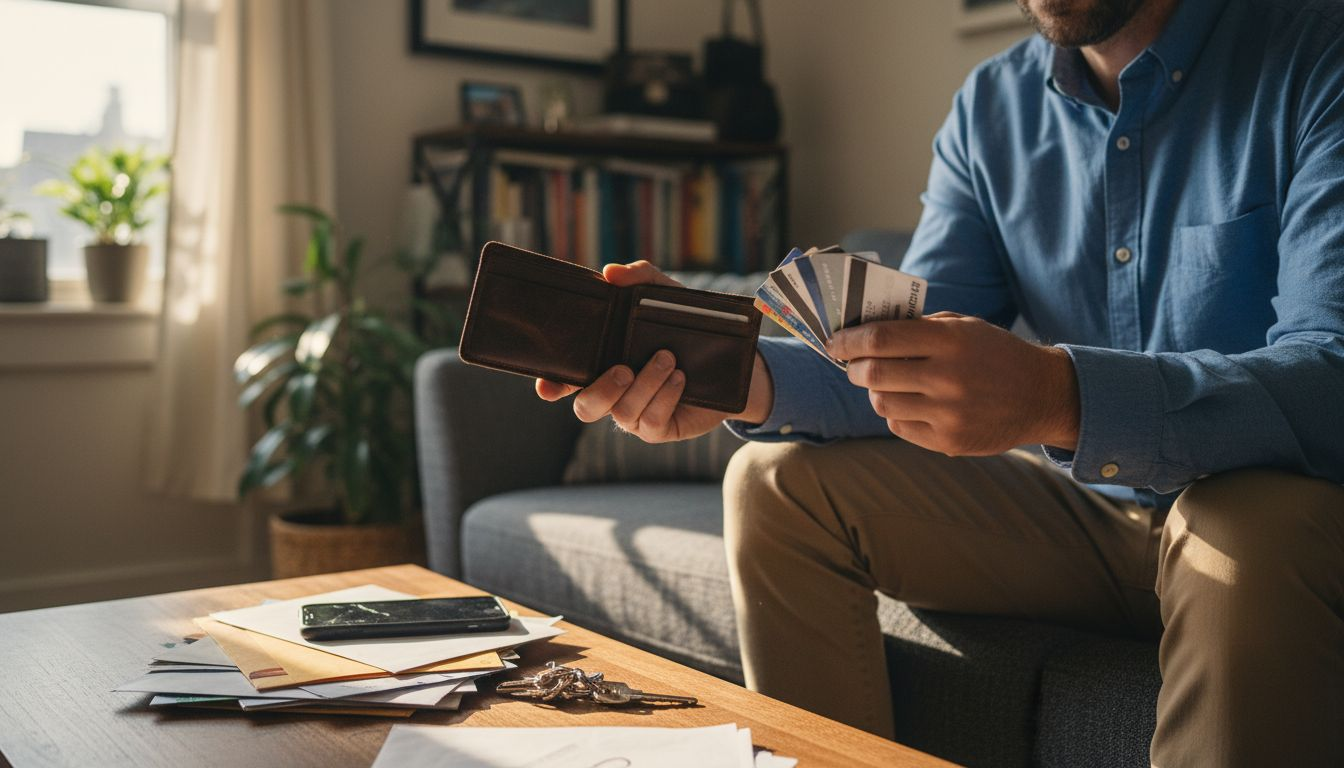
Beyond speed versus security, wallets divide into physical organization styles. Bifold wallets represent the classic choice, folding once to create a compact rectangle. They accommodate substantial card storage and cash, though they create noticeable bulk in pockets. Trifold wallets add another fold for even more capacity but increase thickness further. Slim wallets minimize pocket presence, typically holding five to eight cards plus some cash. Card-slot wallets expose your cards visibly, eliminating fumbling but reducing privacy and weather protection. Passport wallets incorporate document storage for travelers. Travel wallets add multiple compartments for different currencies or tickets. Money clip wallets hold only essential cards and folded cash, achieving maximum minimalism. Each style reflects a different assumption about your daily needs. A financial advisor managing multiple client accounts might need the organizational power of a trifold wallet. An urban commuter using just one transit card and one payment method might thrive with a slim wallet containing only essentials.
Material choices create another crucial distinction affecting both style and safety. Leather wallets offer classic aesthetics and durability that improves with age. Full-grain leather develops character through visible wear patterns. However, genuine leather requires maintenance and doesn’t resist water damage. Synthetic wallets made from technical fabrics or vegan leather resist weather better and require less maintenance. They work well for active professionals or anyone with a minimal aesthetic preference. Hybrid wallets combine materials strategically, using leather for aesthetic appeal on exterior surfaces while adding synthetic reinforcement in stress areas. Some modern wallets incorporate metal frames that distribute weight evenly and prevent sagging. The material you select affects durability, appearance, weather resistance, and even how the wallet feels in your hand. A leather wallet conveys a certain professional image. A technical fabric wallet signals minimalism and practicality. Neither choice is objectively better; they’re simply different solutions for different contexts.
Below is a summary comparing popular wallet materials and their practical implications:
| Material | Durability | Maintenance Needs | Image/Style Impact |
|---|---|---|---|
| Full-Grain Leather | Ages well, strong | Requires regular care | Classic, professional |
| Technical Fabric | Highly durable | Easy to clean | Modern, minimalist |
| Vegan Leather | Water resistant | Low maintenance | Ethical, contemporary |
| Metal Frame Hybrid | Maximum lifespan | Minimal upkeep | High-tech, sturdy look |
Pro tip: Select your wallet type by considering your three most common daily transactions, then test whether the wallet style you’re considering can smoothly handle all three without requiring you to remove other cards or empty the compartments.
Here’s a comparison of major wallet types and what users should consider for each:
| Wallet Type | Ideal For | Key Benefit | Main Trade-Off |
|---|---|---|---|
| Quick Access | Commuters, minimalists | Fast card retrieval | Lower theft protection |
| Security-Focused | Travelers, high-risk areas | Enhanced safety | Slower access to contents |
| Slim/Minimalist | Formal settings | Low pocket profile | Limited storage |
| Organizational | Professionals, travelers | Keeps items separated | Can be bulky and heavy |
| Smart/Digital | Early tech adopters | Location tracking, alerts | Higher cost, charging needed |
Essential Features: Safety and Functionality
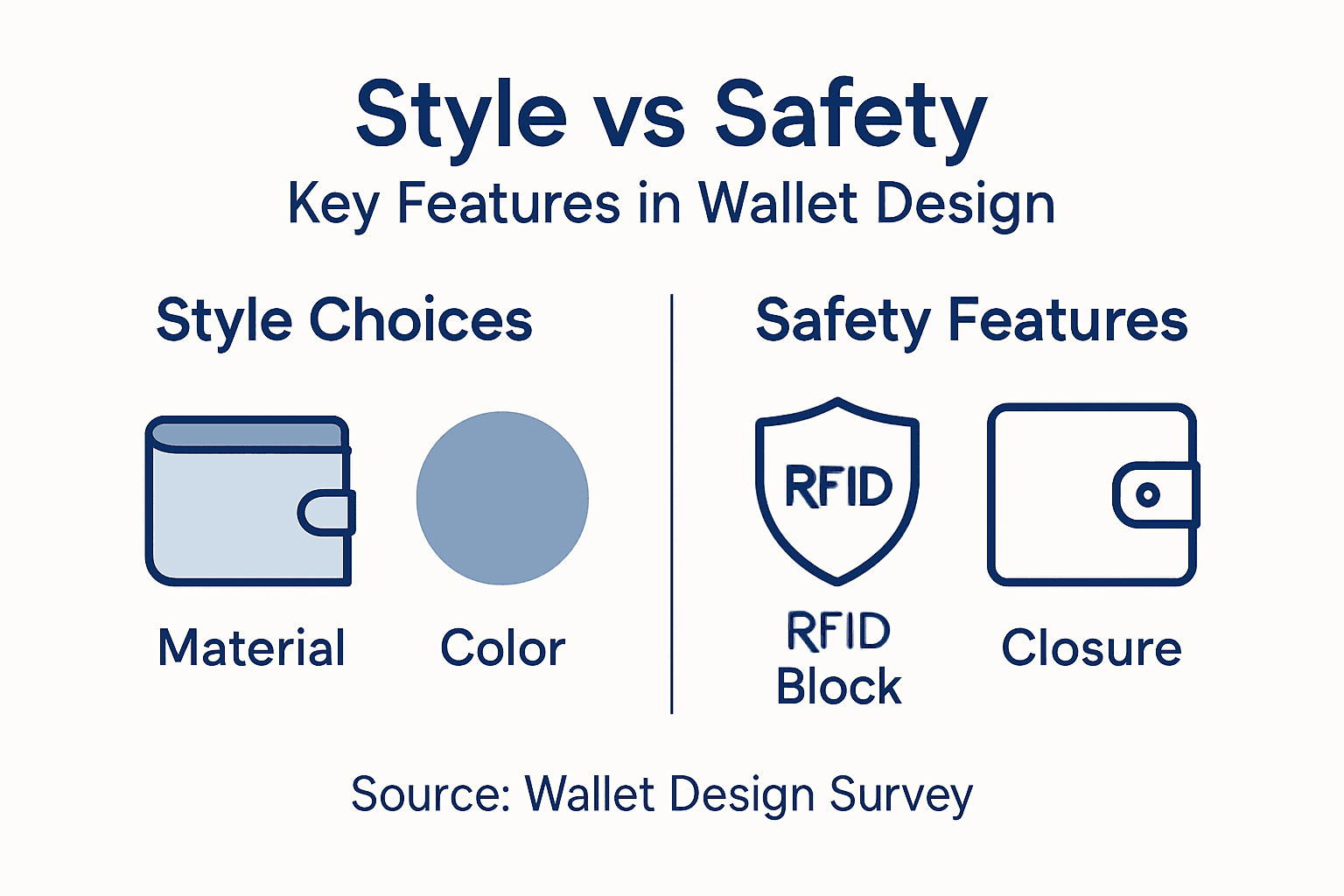
A wallet only works if it accomplishes two things simultaneously. First, it must keep your valuables protected from theft, damage, and unauthorized access. Second, it must let you actually use what’s inside without frustration. This tension defines wallet design. You could theoretically create the most secure wallet imaginable by locking everything in a steel box, but that’s useless if accessing your payment card takes five minutes. Conversely, you could design a wallet so accessible that you can grab any card in milliseconds, but if it offers zero protection against pickpockets or electronic skimming, you’ll spend your day replacing stolen cards. The best wallets solve both problems through thoughtful feature integration.
RFID blocking technology represents perhaps the most important invisible safety feature in modern wallet design. Radio-frequency identification readers can scan credit cards from several feet away, capturing your card data without physical contact. This seems like science fiction, but it’s a genuine threat in crowded urban environments. RFID blocking works by incorporating specialized material layers that disrupt the radio signals these readers emit. You don’t see this technology in your wallet because it’s woven into the fabric or embedded in the lining. It simply works while you go about your day. Beyond electronic theft protection, multiple compartments serve both safety and functionality purposes. Separating your cards by category prevents accidental loss. Your essential identification stays distinct from daily payment methods. Important documents like insurance cards or receipts stay protected in dedicated pockets where they won’t get bent or damaged. These organizational features also make it faster to locate what you need because everything has a designated home.
Reinforced stitching in stress areas directly extends your wallet’s lifespan while preventing catastrophic failures at critical moments. Wallets experience constant bending and pressure. Corners take the worst damage as you repeatedly open and close the wallet, or as it sits folded in your pocket through an entire workday. Professional wallet designers reinforce these high-stress zones with doubled or tripled stitching using heavy-duty thread. This means your wallet’s corners won’t split open during a business meeting. Your card slots won’t collapse after six months. The closure mechanism won’t fail when you need to pay for something urgent. Understanding how security features balance with practical usability reveals why functionality requires robust construction alongside protective technology. A wallet with excellent RFID blocking but weak stitching fails because the protection becomes worthless once the wallet physically falls apart.
Closure mechanisms deserve attention because they embody the safety-functionality trade-off perfectly. Wallets might feature magnetic closures for rapid access, snap buttons for moderate security, zipper closures for maximum protection, or no closure at all for extreme minimalism. Magnetic closures open instantly and stay closed during normal movement, but they offer no barrier against deliberate theft. Snap buttons require conscious effort to open, providing visual deterrence and gentle protection without excessive time investment. Zipper closures seal your contents completely, requiring several seconds to open but providing genuine security for valuable items or travel situations. The choice reflects your specific risk profile. An urban professional using public transit probably benefits from snap buttons or zippers. Someone moving between your own car and office building might prefer magnetic closures for convenience. Modern wallets also incorporate contact-less payment compatibility, ensuring your wallet works with digital payment systems without removing individual cards. This reduces wear on cards because you reach into your pocket less frequently. It also speeds transactions at checkout, reducing your exposure in crowded retail environments where pickpockets operate. Some advanced wallets include GPS tracking features that pair with your phone, letting you locate a lost or stolen wallet through your mobile device. This functionality transforms your wallet from an inert object into an active asset protection tool.
The design philosophy that unites these features is simple: safety and functionality aren’t separate concerns that compete with each other. They’re interconnected aspects of the same problem. The safest wallet is one you’ll actually use consistently because it addresses your real needs. A wallet that forces you to compromise between protection and accessibility will eventually push you toward a different option. When designers integrate safety features thoughtfully alongside practical functionality, they create wallets that disappear into your routine while working harder behind the scenes to protect everything that matters.
Pro tip: Test your wallet’s closure mechanism and card extraction speed using your actual payment cards before purchasing, then confirm it feels secure when you walk briskly or navigate crowded spaces to ensure the safety features don’t create false confidence while functionality actually fails under real conditions.
Global Trends Shaping Wallet Design
Wallet design doesn’t happen in isolation. What designers create today reflects what’s happening in technology, finance, culture, and security worldwide. Understanding these global shifts helps you recognize why wallets look and function differently than they did five years ago, and why the next generation will feel different still. The trends reshaping wallet design originate from multiple sources simultaneously. Digital payment adoption accelerates across developing and developed economies. Cybersecurity threats evolve constantly, forcing designers to stay ahead of new attack vectors. Environmental consciousness pushes manufacturers toward sustainable materials. Urban density in major cities creates new challenges around pickpocketing and theft. Consumer expectations around minimalism and multifunctionality keep climbing. When you zoom out and examine these forces collectively, you see a clear pattern: wallets are becoming simultaneously more sophisticated, more minimalist, more secure, and more connected.
One dominant trend is the shift toward minimalism driven by urban lifestyle changes. Young professionals in Tokyo, London, Berlin, and New York increasingly carry fewer physical items. Smartphones handle payments, identification increasingly moves to digital formats, and people question whether they need to carry traditional wallets at all. This creates a paradox: as fewer people carry wallets, those who do demand wallets that justify their existence through exceptional design. The response has been ultra-slim wallets that hold essentials without creating pocket bulk. Designers experimenting with innovative materials like carbon fiber or aerospace-grade polymers create wallets that weigh less than a smartphone but offer durability that lasts years. Meanwhile, the integration of digital functionality represents another seismic shift. Smart wallets now incorporate Bluetooth connectivity, GPS tracking, and even biometric authentication. Some models connect to mobile apps that alert you if your wallet leaves your phone’s proximity. Others track spending by connecting to payment systems. This trend reveals how global digitalization affects wallet design across regions at different speeds, with leading economies adopting connected wallets while emerging markets still prioritize basic durability and affordability.
Sustainability consciousness fundamentally reshapes material choices in wallet design globally. European designers lead this movement, with Baggizmo emphasizing EU-crafted products using responsibly sourced materials. Leather alternatives from mushroom-based or lab-grown sources replace traditional animal leather in premium wallets. Recycled ocean plastics become fashionable components. Manufacturers reduce chemical processing and focus on longevity rather than fast replacement cycles. This isn’t merely aesthetic positioning; it reflects genuine shifts in consumer values. Professionals aged 25 to 40 increasingly evaluate purchases through environmental impact lenses. They prefer wallets they’ll carry for a decade over disposable models replaced annually. The acceleration of security innovation represents perhaps the most significant underlying trend. Understanding emerging wallet security measures and multi signature authentication reveals how designers respond to escalating threats. RFID blocking becomes standard rather than premium. Biometric integration moves from exotic to expected. Blockchain technology influences even traditional wallets as designers experiment with distributed authentication systems. These security enhancements aren’t responses to hypothetical threats; they address real vulnerabilities documented across global markets.
The convergence of style and utility emerges as the unifying theme across all regions. Where wallets once prioritized either aesthetics or functionality, modern designs refuse this compromise. A beautiful wallet must also organize cards efficiently. A functional wallet must also photograph well on Instagram. An affordable wallet must match both criteria. This convergence pushes designers toward genuine innovation rather than superficial styling. They can’t hide weak functionality behind attractive packaging because social media exposes poor design immediately. Simultaneously, regional variations persist despite global homogenization. Asian markets show stronger interest in connected wallets with multiple payment method integration. European markets emphasize sustainability and craftsmanship. North American markets prioritize minimalism and ease of use. African and South Asian markets require durability and weather resistance for challenging environments. Designers increasingly create regional variants acknowledging these differences rather than imposing one-size-fits-all solutions. The wallets that succeed globally are those that balance international quality standards with local preference recognition.
These trends intersect and amplify each other. A sustainably made wallet appeals to environmentally conscious professionals in developed economies. A minimalist design works for digital natives across all regions. Smart features attract early adopters everywhere. When you select a wallet today, you’re participating in these global conversations whether you realize it or not. Your choice between a traditional leather wallet and a technical fabric version reflects broader cultural shifts. Your preference for minimalism or organization signals where you stand on lifestyle philosophy. Understanding that wallet design reflects these global forces helps you make more intentional choices aligned with your values.
Pro tip: Research the manufacturer’s sourcing and production location when selecting a wallet, as EU-crafted wallets using transparent supply chains typically offer superior longevity and ethical alignment compared to mass-produced alternatives from less regulated markets.
Common Mistakes in Wallet Selection
Most people choose wallets the way they choose everything else when they’re rushed: based on appearance and price alone. They scroll through options, pick something that looks decent and costs less than they expected to spend, and move on. Then six months later, they’re frustrated because cards get bent, the closure breaks, or they can’t find anything inside the overstuffed mess. This pattern repeats because wallet selection lacks the intentionality that other purchase decisions receive. You probably spend more time choosing a coffee shop than choosing a wallet you’ll carry every single day. That imbalance creates predictable mistakes that undermine both style and safety.
The first major mistake is prioritizing aesthetics over actual functionality. A gorgeous minimalist wallet might photograph beautifully, but if it only holds five cards and you regularly carry eight, you’ve bought a design object rather than a practical tool. You’ll either stop carrying essential cards or carry the wallet awkwardly stuffed beyond capacity. The seams fail faster, corners crease permanently, and your investment becomes worthless within months. Similarly, many people select wallets based on brand reputation or trend popularity rather than personal needs. That premium designer wallet everyone on social media carries might be perfect for someone carrying one credit card and identification. For someone managing business and personal payment methods, travel documents, and insurance cards, it’s a poor choice regardless of the brand name. The second critical mistake involves underestimating the importance of security features you can’t see. RFID blocking technology, reinforced card slot construction, and quality closure mechanisms don’t affect how a wallet looks in your hand at a shop counter. They become crucial only after months of daily use or during that unfortunate moment when someone targets your wallet in a crowded venue. Understanding how security vulnerabilities emerge from poor wallet design choices reveals why skipping these invisible protections creates real risk. You might save thirty dollars by choosing a wallet without RFID blocking, but replacing stolen card information and managing fraud investigations costs exponentially more in time and stress.
Another widespread error is ignoring material quality and its long-term implications. Budget wallets using thin, glued-together synthetic materials might feel fine during your initial inspection. After three months of daily compression in your pocket, the glue fails, sections separate, and cards slip out. Cheap leather cracks and discolors unpredictably. Low-quality stitching breaks first at stress points, creating catastrophic failures exactly when you need your wallet most. The cheapest wallet often becomes the most expensive choice when calculated across its actual usable lifespan. A quality wallet costs more upfront but lasts years, making the annual cost negligible. Professional selection requires calculating long-term value rather than just sticker price. Many people also make the mistake of selecting wallets without testing them in realistic contexts. You visit a shop, hold a wallet for thirty seconds, and decide it works. You haven’t tried extracting cards with one hand while standing in line. You haven’t walked briskly to confirm it stays secure. You haven’t checked whether the card slots actually accommodate your specific cards. You haven’t verified whether it fits comfortably in your actual jacket or bag. Testing in artificial retail environments reveals almost nothing about real-world performance.
A final critical mistake involves failing to align wallet choice with actual lifestyle transitions. Your wallet needs shift constantly. The wallet perfect for a student carrying one card differs entirely from what a business professional needs. Your travel wallet requirements differ from daily commute requirements. Many people select one wallet and stubbornly use it regardless of changed circumstances, creating friction in their routine. The most successful approach involves acknowledging that informed wallet selection requires understanding your personal data sovereignty and security protocols alongside practical lifestyle factors. Your wallet choice shapes your daily experience. A poor selection creates constant minor frustrations. A thoughtful selection disappears into your routine, handling your needs effortlessly while protecting what matters.
These mistakes cluster around one core problem: treating wallet selection as a quick, low-priority decision rather than an investment in a daily essential. Spending fifteen minutes considering your actual needs prevents months of frustration. Testing before purchasing reveals incompatibilities you couldn’t discover through observation alone. Prioritizing quality and security features alongside style ensures your wallet works harder for you while lasting substantially longer. The most stylish wallet is useless if it fails functionally. The most secure wallet is wrong for you if it doesn’t fit your lifestyle. The best wallet choice balances all factors thoughtfully rather than optimizing for a single attribute.
Pro tip: Before purchasing any wallet, list your three non-negotiables (such as “holds at least eight cards,” “weighs under three ounces,” or “works in professional settings”), then verify the specific wallet meets all three before completing your purchase.
Discover Wallet Designs That Truly Work for You
The challenge of finding a wallet that perfectly blends style with safety is real. You want a wallet that not only looks great but also protects your valuables with features like RFID blocking and reinforced stitching. The frustration of bulky wallets or poorly organized interiors can disrupt your daily routine. At Baggizmo, we understand these pain points and prioritize wallets that merge practicality with sophisticated European design. Our collection reflects the latest in modern wallet innovation, focusing on secure materials, functional layouts, and elegant minimalism to support your lifestyle seamlessly.
Explore our Design Archives – Baggizmo to learn how thoughtful construction elevates every wallet. Dive into the future of secure, connected wallets through Tech Archives – Baggizmo where innovation meets protection. Ready to upgrade your essentials? Visit Baggizmo Shop now and find wallets crafted for durability, safety, and style. Don’t settle for less when your wallet can safeguard what matters while fitting flawlessly into your life. Shop today and experience the difference design makes.
Frequently Asked Questions
What is the importance of wallet design in everyday use?
A well-designed wallet integrates accessibility and protection, ensuring you can easily access your cards and cash while keeping your personal information secure from theft.
How do RFID blocking features enhance wallet security?
RFID blocking technology disrupts radio signals used by thieves to skim credit card information, providing an invisible layer of security that protects your financial data in crowded environments.
What are the main differences between quick access and security-focused wallets?
Quick access wallets prioritize easy retrieval of cards, making them convenient but potentially less secure. Security-focused wallets offer enhanced protective features, which may require more time to access contents but better safeguard against theft.
How can I choose the right wallet type based on my lifestyle?
Consider your daily activities and needs, such as the number of payment methods you use, your security concerns, and the level of organization you require. Testing the wallet’s functionality in real-life situations can also help you make an informed decision.
Recommended
- Wallet Safety Explained: Protecting Your Digital Assets
- Role of Wallets in Fashion: Style Meets Utility
- Role of Wallets in Daily Life – Modern Convenience & Security
- Why Invest in Smart Wallets: Security Meets Style
Need an everyday carry bag?
Meet Baggizmo Crossbody — built for daily essentials, close and secure.


