
2
Jan
Most American urban professionals know that wallet safety is no longer optional, especially with digital theft rising by over 60 percent in the past five years. Caring about appearance doesn’t mean ignoring security—your wallet should protect as boldly as it impresses. Discover how the latest smart wallet technologies blend trusted safety measures with modern design, delivering the peace of mind and style that matter in a fast-moving, connected world.
Table of Contents
- What Is Wallet Safety And Why It Matters
- Types Of Wallet Security: Physical Vs. Digital
- Smart Wallets And Modern Safety Features
- Common Wallet Security Risks And How To Avoid Them
- Comparing Traditional Wallets And Tech-Enhanced Options
Key Takeaways
| Point | Details |
|---|---|
| Importance of Wallet Safety | Implementing multiple layers of security is crucial to protect both physical and digital wallets from threats and to maintain data integrity. |
| Types of Wallet Security | Understanding the differences between physical and digital wallets helps in choosing the right protective strategies based on individual needs. |
| Modern Smart Wallets | Smart wallets leverage technology for enhanced security features, including biometric authentication and AI-driven fraud detection, offering more robust protection. |
| Mitigating Risks | Users should adopt proactive security measures, including two-factor authentication and using hardware wallets, to significantly reduce vulnerabilities and cybersecurity threats. |
What Is Wallet Safety and Why It Matters
Wallet safety represents a critical digital security strategy designed to protect valuable financial and personal information across physical and digital platforms. In an increasingly connected world, understanding how to secure your assets has become more important than ever. Wallet safety encompasses comprehensive protection measures for both traditional leather wallets and digital asset storage systems, focusing on preventing unauthorized access, minimizing theft risks, and maintaining personal data integrity.


The core principle of wallet safety involves implementing multiple layers of security to safeguard sensitive information. This includes protecting physical wallets from pickpocketing and digital wallets from cyber threats. Secure digital transactions and personal data sovereignty now depend on robust wallet protection strategies that integrate technological solutions with smart personal practices. Modern wallet safety approaches combine encryption technologies, authentication protocols, and user awareness to create comprehensive defense mechanisms.
Critical components of effective wallet safety include password management, two-factor authentication, regular security updates, and strategic backup systems. Digital asset holders must remain vigilant about potential vulnerabilities, understanding that wallet security involves carefully managing backup copies and encryption protocols. This means creating strong, unique passwords, utilizing encrypted backup storage, and being cautious about sharing personal information across digital platforms.
Understanding wallet safety is not just about preventing immediate financial loss, but about maintaining long-term personal and financial security in an increasingly digital world. Proactive protection strategies can significantly reduce the risk of identity theft, unauthorized transactions, and potential financial damages.
Pro tip: Use a dedicated secure digital password manager to generate and store complex, unique passwords for all your financial accounts and digital wallets.
Types of Wallet Security: Physical vs. Digital
Wallet security strategies can be broadly categorized into two primary domains: physical and digital protection mechanisms. Understanding the nuanced differences between hardware and software wallet technologies is crucial for developing a comprehensive personal security approach. Physical wallets include traditional leather carriers and specialized devices designed to protect financial and identification documents, while digital wallets encompass electronic systems for managing financial assets and personal credentials.
Physical wallet security focuses on preventing theft, damage, and unauthorized access through tangible protective measures. This includes features like RFID-blocking materials, durable construction, and strategic design elements that minimize the risk of pickpocketing. Digital wallet security, conversely, centers on protecting electronic assets through advanced technological safeguards. Hardware wallets offer superior protection by keeping private cryptographic keys completely offline, significantly reducing the potential for cybersecurity breaches.
Each wallet type presents unique advantages and challenges. Physical wallets require careful physical management and can be lost or stolen, while digital wallets demand constant vigilance against evolving cyber threats. Hardware wallets provide a robust middle ground, offering offline storage with enhanced security protocols. Software wallets deliver convenience and instant accessibility but remain more vulnerable to sophisticated digital attacks. Selecting the right wallet type depends on individual risk tolerance, lifestyle, and the specific assets being protected.
The evolution of wallet security continues to blur traditional boundaries, with modern solutions integrating physical and digital protective technologies. Smart wallets now incorporate advanced features like biometric authentication, GPS tracking, and real-time breach alerts, representing a sophisticated convergence of physical design and digital innovation.
Pro tip: Consider using a combination of physical and digital wallet security strategies to create a multilayered protection approach for your most valuable assets.
Smart Wallets and Modern Safety Features
Smart wallets represent the cutting edge of personal security technology, integrating advanced digital protections with sophisticated design. Modern digital wallet platforms now incorporate complex technological safeguards that transform how users manage and protect their financial assets. These innovative solutions go beyond traditional wallet functionalities, embedding multiple layers of security to protect against emerging digital threats.

The core technological advancements in smart wallets include biometric authentication, AI-driven fraud detection, and multi-factor security protocols. Biometric features like fingerprint recognition and facial scanning provide personalized access control, dramatically reducing the risk of unauthorized transactions. Artificial intelligence algorithms continuously monitor transaction patterns, instantly flagging suspicious activities and potential security breaches. These intelligent systems can distinguish between legitimate user behaviors and potential fraudulent actions with remarkable precision.
Comprehensive safety evaluations reveal that leading digital wallet platforms now provide extensive protection mechanisms, including end-to-end encryption, real-time transaction monitoring, and advanced liability protections. Users can now enjoy unprecedented levels of financial security, with instant notifications, remote device locking, and comprehensive insurance against potential losses. The integration of these technologies creates a robust defensive ecosystem that adapts to evolving digital security challenges.
The future of wallet security lies in continuous technological innovation, where physical and digital protections merge seamlessly. Smart wallets are no longer just storage devices but intelligent security systems that proactively defend users’ financial and personal information across multiple platforms and potential threat vectors.
Pro tip: Enable all available security features on your digital wallet and regularly update your authentication settings to maintain maximum protection.
Common Wallet Security Risks and How to Avoid Them
Digital wallets have become increasingly vulnerable to sophisticated cyber threats that can compromise personal financial information and assets. Cybersecurity risks including ransomware, phishing, and malware attacks pose significant challenges for digital wallet users, requiring proactive and comprehensive protection strategies. Understanding these risks is the first critical step in developing an effective personal security approach.
The most prevalent wallet security risks can be categorized into several key domains. Phishing attacks represent a primary threat, where malicious actors attempt to trick users into revealing sensitive authentication credentials. Online wallet breaches occur when hackers exploit system vulnerabilities to gain unauthorized access to digital accounts. Malware infections can compromise device security, potentially exposing private keys and financial information. Recommended mitigation strategies include using two-factor authentication, maintaining minimal balances in hot wallets, and creating encrypted backup systems, which significantly reduce potential exposure to financial risks.
Effective wallet security demands a multi-layered defensive approach. This includes implementing robust password management, regularly updating software and security protocols, and maintaining heightened awareness of potential digital threats. Users should consider utilizing hardware wallets for storing significant asset amounts, as these physical devices provide an additional layer of protection by keeping cryptographic keys completely offline. Continuous education about emerging cyber threats and adaptive security practices remains crucial in maintaining comprehensive wallet protection.
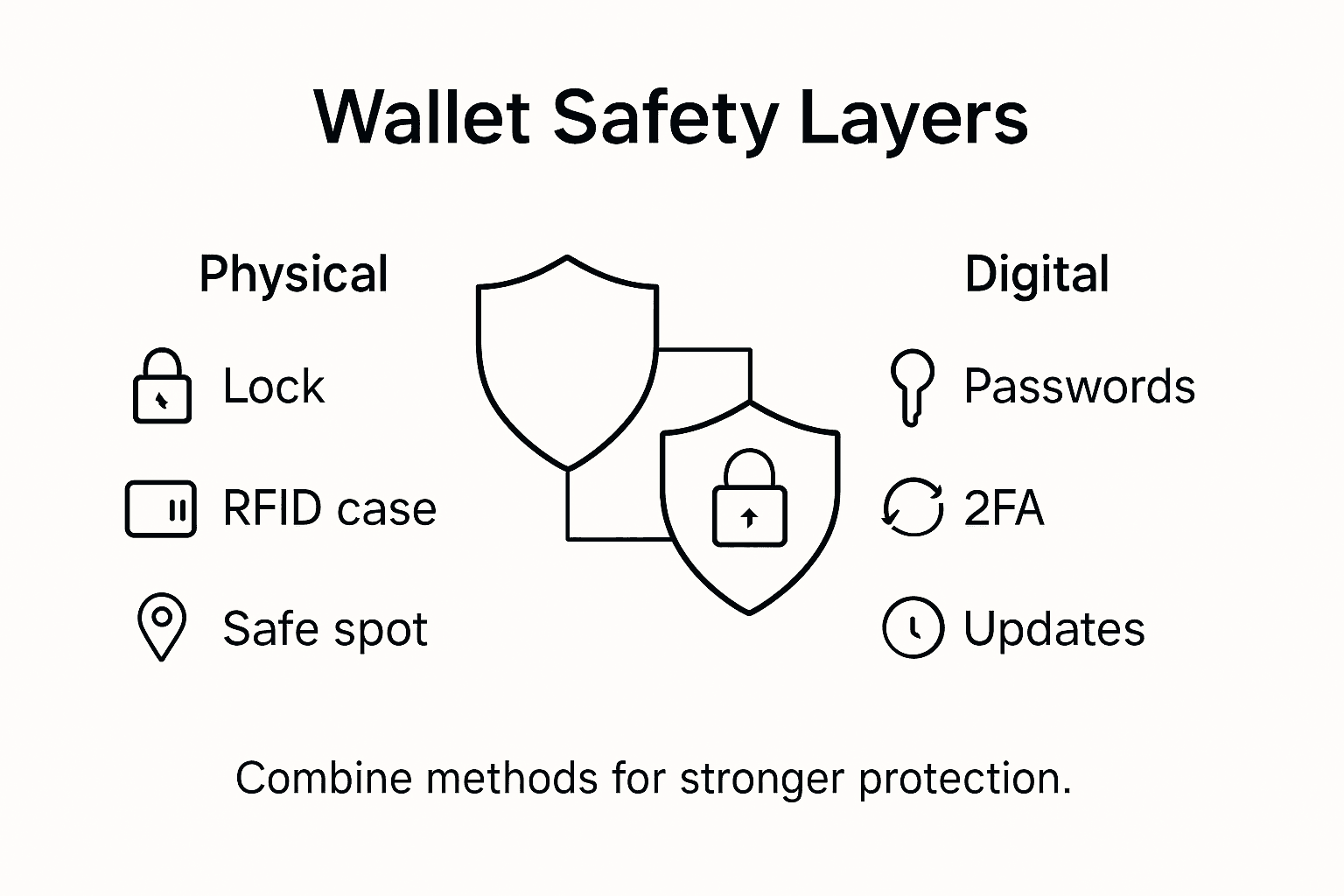
Technology continues to evolve, presenting both new challenges and innovative solutions for wallet security. Advanced encryption technologies, artificial intelligence-driven threat detection, and biometric authentication are transforming how users protect their digital assets. By staying informed and adopting proactive security measures, individuals can significantly reduce their vulnerability to potential financial breaches.
Here’s a summary of the most common wallet security risks and the best way to address each one:
| Risk Type | Potential Impact | Optimal Mitigation |
|---|---|---|
| Phishing Attacks | Stolen credentials, fraud | Use 2FA, verify sources |
| Online Wallet Breaches | Unauthorized account access | Use hardware wallets |
| Malware Infections | Exposed private keys, theft | Update software, scan devices |
| Weak Passwords | Easy account compromise | Use a password manager |
| Unencrypted Backups | Data loss, privacy breaches | Store backups encrypted |
Pro tip: Implement a comprehensive password management system that generates unique, complex passwords for each financial account and enables two-factor authentication.
Comparing Traditional Wallets and Tech-Enhanced Options
The evolution of wallet technologies represents a profound shift in how individuals manage and protect their personal financial assets. Traditional physical wallets are rapidly being transformed by digital innovations that offer unprecedented levels of convenience and security. Where once wallets were simple leather carriers for cash and cards, they now represent sophisticated digital ecosystems designed to protect personal information and enable seamless financial interactions.
Traditional wallets excel in tangible reliability, offering physical durability and a straightforward user experience. Tech-enhanced wallets, by contrast, introduce advanced features like biometric authentication, real-time transaction monitoring, and instant digital payment capabilities. These digital solutions provide layers of security traditional wallets cannot match, including encryption technologies that protect against unauthorized access and sophisticated fraud detection mechanisms. Mobile wallet technologies are fundamentally reshaping payment landscapes by offering increased efficiency and enhanced user experiences, while still maintaining compatibility with established financial infrastructure.
The key differences between traditional and tech-enhanced wallets extend beyond mere functionality. Modern digital wallets integrate seamlessly with smartphones, enable instant global transactions, and provide comprehensive financial tracking and management tools. They offer dynamic security protocols that can instantly detect and prevent fraudulent activities, a capability entirely absent in traditional physical wallets. Meanwhile, traditional wallets maintain advantages in simplicity, immediate accessibility, and independence from technological infrastructure.
As financial technologies continue advancing, the distinction between traditional and tech-enhanced wallets becomes increasingly nuanced. Hybrid solutions are emerging that combine the best attributes of physical durability with digital security innovations, suggesting a future where wallet technologies become increasingly personalized and adaptive to individual user needs and preferences.
This table highlights the main differences between traditional wallets and tech-enhanced digital wallets:
| Attribute | Traditional Wallet | Tech-Enhanced Wallet |
|---|---|---|
| Main Material | Leather or fabric | Electronics/software |
| Security Features | Physical design, RFID | Biometric ID, encryption |
| Accessibility | Manual, always on-person | Global, smartphone-integrated |
| Recovery Options | None if lost | Backup and recovery support |
Pro tip: Consider maintaining both a traditional and a digital wallet to leverage the unique advantages of each technological approach.
Elevate Your Wallet Safety With Smart Choices From Baggizmo
Protecting your digital assets requires more than awareness it demands the right tools built for modern security challenges. This article highlights the importance of multilayered protection whether you rely on physical wallets, hardware solutions, or smart digital wallets featuring biometric authentication and encryption. At Baggizmo, we understand the need for practical yet stylish wallets equipped with essential safety features to keep your valuables and personal information secure.
Explore our curated collection of technologically advanced wallets and accessories in the Tech Archives – Baggizmo where innovation meets design crafted in the EU. Don’t wait until a security breach threatens your peace of mind. Upgrade today by visiting Baggizmo shop to discover exclusive limited edition wallets designed for safety and style. Secure your assets with cutting-edge technology and timeless craftsmanship now and enjoy free shipping on orders over $200.
Frequently Asked Questions
What is wallet safety and why is it important?
Wallet safety refers to measures taken to protect both physical and digital wallets from theft, unauthorized access, and cyber threats. It’s crucial for maintaining the integrity of personal and financial information in an increasingly connected world.
What are the main types of wallet security?
The two main types of wallet security are physical security, which protects traditional wallets from theft and damage, and digital security, which safeguards online wallets through technological measures like encryption and two-factor authentication.
How can smart wallets enhance wallet safety?
Smart wallets incorporate advanced features like biometric authentication, AI-driven fraud detection, and real-time transaction monitoring, providing multiple layers of security compared to traditional wallets.
What are common wallet security risks and how can they be avoided?
Common risks include phishing attacks, malware infections, and online wallet breaches. To avoid these risks, users should implement two-factor authentication, regularly update security protocols, and consider using hardware wallets for significant asset storage.
Recommended
- 7 Key Benefits of RFID Wallets Every Smart Shopper Should Know
- NFC Wallets Explained: Secure Payments and Features
- RFID Protection: Shielding Privacy in Everyday Life
- 7 Key Advantages of RFID Wallets for Stylish Professionals
Need an everyday carry bag?
Meet Baggizmo Crossbody — built for daily essentials, close and secure.


