
3
Dec
Most American consumers have yet to realize that over 60 percent of digital wallet users report greater confidence in their financial security than with traditional methods. As contactless payments sweep through daily life, misinformation about NFC wallets keeps many people hesitant. This guide dispels the biggest myths, reveals how NFC wallets really work, and explains why these digital tools are quickly becoming the new favorite for safe, instant transactions in the American marketplace.
Table of Contents
- Defining NFC Wallets And Common Misconceptions
- How NFC Wallet Technology Works Securely
- Types Of NFC Wallets And Their Features
- Benefits And Real-World Uses Of NFC Wallets
- Security Risks And Safe Usage Tips
- Comparing NFC Wallets With Traditional Alternatives
Key Takeaways
| Point | Details |
|---|---|
| NFC Wallets Enhance Financial Transactions | NFC wallets enable secure, contactless payments through short-range communication, improving transaction speed and convenience. |
| Robust Security Features | These wallets use advanced encryption, tokenization, and dynamic authentication to protect user financial information. |
| Variety of Options Available | Consumers can choose from smartphone-integrated wallets, standalone smart wallets, and wearable options, catering to different preferences. |
| Critical Safety Practices | Users can enhance security by disabling NFC when not in use, using secure apps, and monitoring financial statements regularly. |
Defining NFC Wallets and Common Misconceptions
Near Field Communication (NFC) wallets represent an innovative digital payment solution designed to transform how consumers manage financial transactions. Unlike traditional leather wallets, these smart accessories leverage advanced wireless technology to enable secure, contactless payments through short-range electromagnetic communication between devices.


At its core, an NFC wallet functions by embedding a small NFC chip that can communicate with payment terminals and smartphones within extremely close proximity. Consumer adoption research reveals several common misconceptions that prevent widespread understanding of this technology. Many people mistakenly believe NFC wallets are inherently less secure than traditional payment methods, when in fact they offer multiple sophisticated security layers.
Some key features that distinguish NFC wallets include:
- Instant transaction processing
- Enhanced encryption protocols
- Zero physical card exposure
- Simplified payment experiences
- Compatibility with multiple digital payment platforms
Contrary to popular belief, NFC technology does not continuously broadcast personal information. The communication occurs only when the wallet is intentionally positioned within 1-2 inches of a compatible payment reader, creating a controlled and secure transaction environment. Security remains paramount, with advanced techniques like tokenization and dynamic data authentication protecting user financial information from potential unauthorized access.
By understanding how NFC wallets actually function, consumers can appreciate the sophisticated technology transforming modern financial interactions. These smart accessories represent more than just a payment method—they signify a significant leap toward streamlined, secure digital transactions.
How NFC Wallet Technology Works Securely
NFC wallet technology represents a sophisticated approach to digital financial transactions, utilizing advanced electromagnetic communication protocols to enable secure, contactless payments. The core mechanism involves a tiny embedded microchip that generates a short-range wireless signal capable of transmitting encrypted financial data between devices with remarkable precision.
Researchers have developed advanced security protocols specifically designed to protect NFC wallet transactions. These protocols ensure multiple layers of protection, including mutual authentication, confidentiality, and transaction integrity. The technology’s security framework goes far beyond traditional payment methods by implementing dynamic encryption techniques that change with each transaction.
The fundamental security features of NFC wallets include:
- Proximity-based communication: Signals only transmit within 1-2 inches
- Tokenization: Replacing sensitive card data with unique transaction codes
- Encryption: Advanced algorithmic protection of financial information
- Dynamic authentication: Generating unique verification codes for each transaction
Security analysis research highlights the sophisticated mechanisms that prevent unauthorized access. Unlike traditional payment methods, NFC wallets generate temporary, single-use transaction codes that become invalid immediately after use. This means even if someone were to intercept the signal, the captured data would be essentially worthless for future transactions.
The intricate design of NFC wallet technology transforms digital payments into a highly secure process. By leveraging cutting-edge electromagnetic communication and advanced encryption protocols, these smart accessories provide users with a level of financial protection that far surpasses traditional payment methods.

Types of NFC Wallets and Their Features
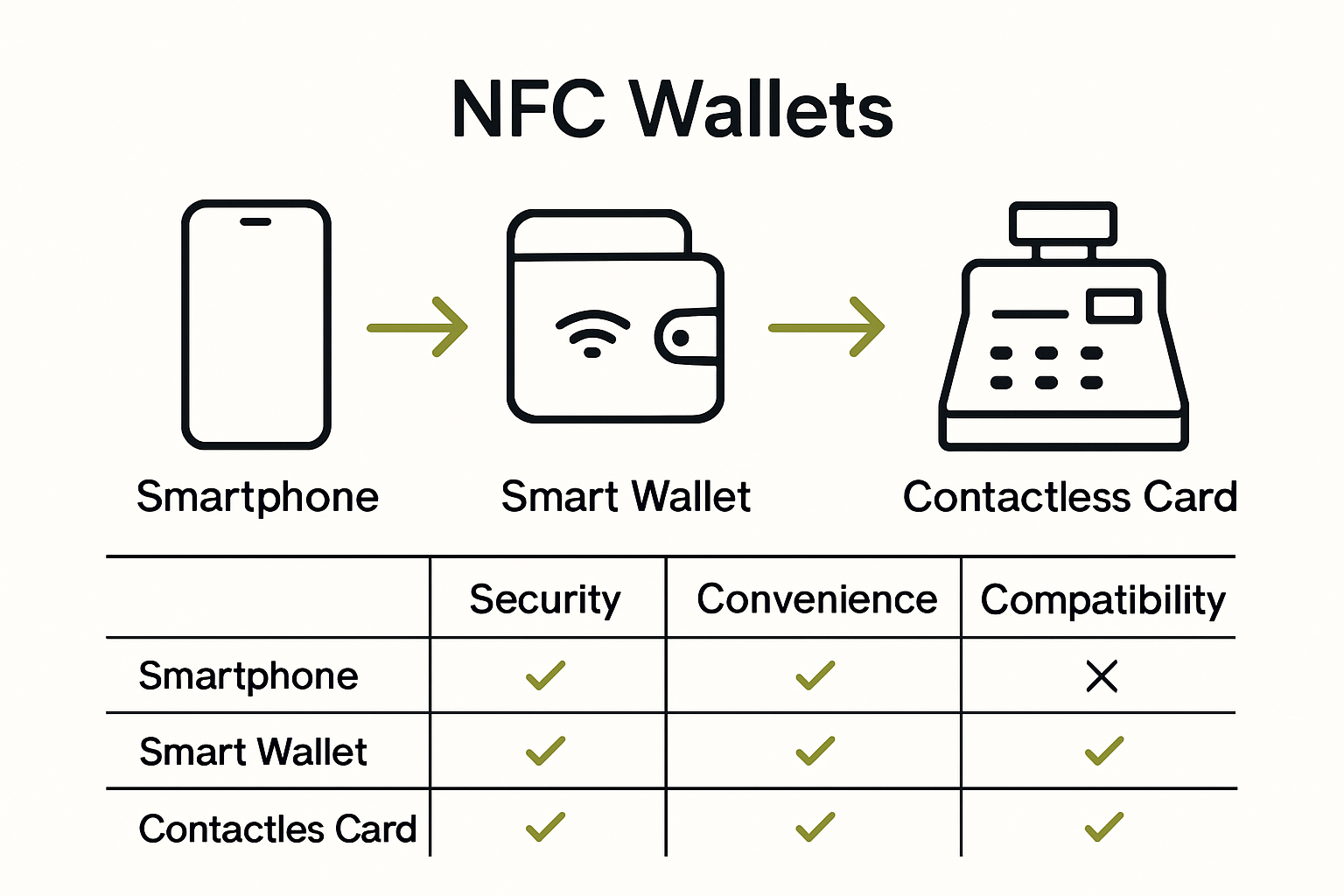
NFC wallet technology has evolved dramatically, offering consumers a diverse range of digital payment solutions tailored to different lifestyle needs and preferences. Digital wallet research reveals a sophisticated landscape of wallet types, each designed to address specific user requirements and technological capabilities.
The primary categories of NFC wallets include:
- Smartphone-Integrated Wallets: Built directly into mobile device operating systems
- Standalone Smart Wallets: Dedicated physical accessories with embedded NFC chips
- Wearable NFC Wallets: Integrated into accessories like watches, wristbands, and rings
- Hybrid Digital Wallets: Combining physical card functionality with digital payment technologies
Cryptocurrency wallet analysis highlights the increasing complexity of digital wallet architectures. Modern NFC wallets are not just payment tools but sophisticated digital interfaces that offer advanced features like real-time transaction tracking, spending analytics, and multi-platform compatibility. The smartphone-integrated wallet remains the most popular type, allowing users to store multiple payment methods in a single digital platform.
Standalone smart wallets represent an innovative approach for users seeking dedicated payment accessories. These devices often include additional features like battery charging, location tracking, and biometric security mechanisms. By offering a blend of traditional wallet functionality and cutting-edge digital technology, NFC wallets are transforming how consumers manage and interact with their financial resources.
Benefits and Real-World Uses of NFC Wallets
NFC mobile payment services have dramatically transformed how consumers interact with financial transactions, offering unprecedented convenience and security across multiple sectors. These digital payment solutions extend far beyond simple monetary exchanges, providing users with a versatile tool for managing personal and professional financial interactions.
The primary benefits of NFC wallets include:
- Rapid Transaction Processing: Payments completed in seconds
- Enhanced Security: Multiple layers of encryption and authentication
- Contactless Convenience: Minimal physical contact during transactions
- Comprehensive Financial Management: Real-time spending tracking
- Universal Compatibility: Works across multiple payment platforms
Real-world applications demonstrate the remarkable versatility of NFC wallet technology. Professionals can seamlessly split restaurant bills, travelers can make quick international purchases without currency exchange complications, and students can manage campus purchases with unprecedented ease. Public transportation systems, retail stores, and even small vendors now readily accept these digital payment methods, creating a more interconnected financial ecosystem.
The technological sophistication of NFC wallets extends beyond traditional payment scenarios. From accessing secure building entrances to managing digital loyalty programs, these smart devices are transforming how individuals interact with their financial and personal environments. By combining cutting-edge security protocols with user-friendly interfaces, NFC wallets represent a significant leap forward in personal financial technology.
Security Risks and Safe Usage Tips
Security protocols for NFC-enabled devices highlight critical considerations for protecting personal financial information in the digital age. While NFC wallet technology offers remarkable convenience, users must remain vigilant about potential vulnerabilities that could compromise their financial security.
Key security risks associated with NFC wallets include:
- Proximity Interception: Unauthorized data capture within close range
- Signal Cloning: Potential replication of payment credentials
- Device Malware: Risks of compromised smartphone applications
- Electronic Pickpocketing: Unauthorized scanning of wallet credentials
Comprehensive vulnerability analysis reveals sophisticated methods for mitigating these risks. Users can protect themselves by implementing several critical safety strategies:
- Keep NFC disabled when not actively making transactions
- Use dedicated secure payment applications
- Regularly update device software and payment apps
- Enable additional authentication layers like biometric verification
- Monitor financial statements frequently for suspicious activities
The most effective defense against NFC wallet risks involves a combination of technological awareness and personal vigilance. By understanding potential vulnerabilities and adopting proactive security measures, consumers can confidently leverage the convenience of digital payment technologies while maintaining robust protection for their financial resources.
Comparing NFC Wallets With Traditional Alternatives
Digital wallet technologies have fundamentally transformed payment methods, creating a stark contrast between traditional physical wallets and modern contactless payment solutions. Where conventional wallets rely on physical currency and plastic cards, NFC wallets represent a quantum leap in financial transaction management.
Key differences between traditional and NFC wallets include:
- Transaction Speed: NFC wallets complete payments in seconds
- Physical Bulk: Traditional wallets are thick and heavy
- Security Mechanisms: NFC wallets offer advanced encryption
- Information Tracking: Digital wallets provide real-time spending insights
- Compatibility: NFC wallets work across multiple platforms
Cryptocurrency wallet research reveals that modern digital wallets offer significantly more than simple payment tools. Traditional wallets restrict users to physical cash and cards, while NFC wallets provide dynamic financial management capabilities, including spending analytics, instant transaction records, and seamless multi-platform integration.
The evolution from traditional to digital wallets represents more than a technological upgrade. It signifies a fundamental shift in how individuals perceive, manage, and interact with their financial resources. NFC wallets are not just alternatives to leather wallets but sophisticated digital ecosystems that provide unprecedented convenience, security, and financial insight.
Discover Secure Style With NFC-Enabled Smart Wallets at Baggizmo
Navigating the world of digital payments can feel overwhelming with concerns about security and convenience at every turn. This article explained how NFC wallets provide advanced encryption, tokenization, and proximity-based communication to keep your transactions safe and effortless. But why settle for just any wallet when you can combine cutting-edge technology with modern European design? Explore the latest smart wallets featuring embedded safety features and sleek craftsmanship designed for consumers who value both function and fashion.

Experience the future of secure payments today by browsing the Tech Archives – Baggizmo for innovative smart wallets and accessories. With limited editions and exclusive offers, now is the perfect moment to upgrade your everyday carry. Visit Baggizmo to shop stylish wallets and join a community that blends technology with timeless design.
Frequently Asked Questions
What is an NFC wallet?
An NFC wallet is a digital payment solution that utilizes Near Field Communication technology to enable secure, contactless transactions between devices within close proximity, enhancing the convenience of financial interactions.
How does NFC wallet technology secure my financial information?
NFC wallets employ multiple layers of security, including tokenization, advanced encryption, and dynamic authentication to protect users’ financial data from unauthorized access during transactions.
What are the key benefits of using an NFC wallet over traditional wallets?
NFC wallets offer rapid transaction processing, enhanced security, contactless convenience, comprehensive financial management through real-time tracking, and universal compatibility across multiple payment platforms.
Are there any risks associated with using NFC wallets?
Yes, some risks include proximity interception, signal cloning, device malware, and electronic pickpocketing. Users can mitigate these risks by keeping NFC disabled when not in use, using secure payment apps, and enabling biometric verification.
Recommended
- Top 10 Uses for NFC Tags | Ultimate Guide | Baggizmo
- Baggizmo® Wiseward – It’s Got The Brains. It’s Got The Look.
- The Benefits of an RFID Wallet | Ultimate Guide | Baggizmo
- Why You Need An RFID Blocking Bifold Wallet
Article generated by BabyLoveGrowth
Need an everyday carry bag?
Meet Baggizmo Crossbody — built for daily essentials, close and secure.


