
22
Jan
Morning commutes in cities like Toronto or Singapore often require constant flexibility. Urban professionals juggle a laptop, paperwork, gym gear, and personal items while moving between work meetings and networking events. You need a bag that goes beyond looks, offering strategic compartmentalization, ergonomic design, and durability to keep up with your pace. Discover how a functional bag merges style and usability, organizing your essentials and protecting your investments without sacrificing comfort or polish.
Table of Contents
- Defining Functional Bags for Urban Life
- Key Features That Ensure Real Usability
- Categories and Popular Use Cases Explained
- Safety, Tech, and Modern Material Considerations
- Balancing Style, Durability, and Comfort
Key Takeaways
| Point | Details |
|---|---|
| Functional Bags Are Essential | They balance aesthetics and practicality to meet the needs of urban professionals. |
| Design Features Matter | Key elements like grabability, compartmentalization, and ergonomic design enhance usability. |
| Consider Your Needs | Select a bag that suits specific activities, whether for commuting, traveling, or specialized tasks. |
| Quality Materials Ensure Longevity | Invest in durable, weather-resistant materials that protect your belongings and last for years. |
Defining Functional Bags for Urban Life
A functional bag is far more than a fashion accessory. It is a carefully engineered solution designed to balance aesthetic appeal with practical utility, addressing the real challenges urban professionals face during their daily routines. Unlike purely decorative bags or oversized totes, functional bags are built with intention. They organize your belongings efficiently, protect your valuables, and adapt to the unpredictable demands of city living where you might transition from a coffee meeting to a networking event to a grocery run, all within hours. At their core, functional bags solve a specific problem: how do you carry everything you need without sacrificing comfort, style, or accessibility?


The foundation of a functional bag lies in understanding multi-tasking design requirements, which means balancing aesthetics with genuine usability. Urban professionals aged 25-40 need bags that work across multiple contexts. Your morning commute might involve a laptop and client files, but your evening could call for a transition-friendly piece that looks polished in a boardroom yet remains practical for traveling to dinner. This is where form meets use becomes reality. The bag’s structure, compartmentalization, material choice, and weight distribution all contribute to whether it genuinely serves your lifestyle or becomes an ornamental object gathering dust. Disorganized bags drastically reduce usable space and create frustration when you cannot locate essential items quickly. A well-designed functional bag prevents this through strategic organization with dedicated compartments for technology, documents, personal items, and daily essentials, ensuring nothing gets lost in a black hole.
Ergonomics play a critical role that many shoppers overlook. Your bag will carry varying weights throughout the day, from a light Tuesday (laptop and wallet) to a heavy Friday (laptop, presentation materials, water bottle, and weekend items). Functional bags account for this variability through design choices that distribute weight evenly across your shoulders or body, reducing strain on specific muscle groups. This consideration is particularly important for professionals who carry bags daily for 200+ days per year. The strap width, padding thickness, and overall weight of the empty bag itself all influence whether you arrive at work energized or already fatigued. Additionally, functional bags adapt to your changing needs. Whether you need expandable compartments for unexpected purchases, removable straps for styling flexibility, or convertible designs that shift from backpack to tote, the best functional pieces anticipate these transformations rather than forcing you into a rigid format.
When evaluating any bag for your urban lifestyle, consider how its design choices directly address your daily challenges. Does it have protected pockets for your phone and keys? Can you access your laptop without unpacking everything else? Will it complement your work wardrobe while handling the physical demands of your commute? The answer to these questions determines whether a bag is simply beautiful or genuinely functional. Looking at practical examples of functional bags designed for urban environments can help you understand how these principles translate into real products that solve actual problems. The most successful functional bags disappear into your daily routine, working silently to organize, protect, and carry while making you feel prepared and confident.
Pro tip: Before purchasing a new bag, create a detailed list of what you actually carry daily for one week, then measure those items’ combined dimensions against the bag’s internal space plus compartment specifications to ensure realistic fit.
Key Features That Ensure Real Usability
When you pick up a bag in a store, you’re not just evaluating its appearance. You’re making a split-second assessment of whether it will actually work for your life. Real usability separates bags that look good from bags that perform well, and the difference comes down to specific, intentional design features. The most practical functional bags share common characteristics that make them reliable partners for your daily routine. These aren’t arbitrary design choices. Each feature addresses a genuine frustration that urban professionals experience when carrying bags that fail to deliver on their promise.
The first critical dimension is what researchers call grabability and searchability. Think about the last time you fumbled through a bag looking for your keys or phone while standing in line or rushing to a meeting. A truly functional bag eliminates this problem through strategic compartmentalization. This means dedicated slots for your phone, secure pockets for important cards, and a main compartment organized with dividers or fabric organizers that keep similar items together. According to analysis of handbag usability dimensions, compartmentalization directly impacts how quickly you can locate and retrieve items without unpacking everything. Side pockets for water bottles, front compartments for frequently accessed items, and zippered sections for valuables create a system where each item has a home. When every item has a designated location, you spend less mental energy searching and more time actually working. This organizational structure also prevents damage. Your laptop won’t get crushed by loose items, and your sunglasses won’t get scratched by keys tossed carelessly into the main compartment.
Openability and closure systems are equally important but often overlooked. Your bag needs to open and close quickly without complicated mechanisms, yet still secure your belongings reliably. The best functional bags typically feature magnetic closures for the outer compartments paired with sturdy zipper systems for main sections. Magnetic closures give you one-handed access when you’re carrying coffee or a portfolio in your other hand, while zippers provide genuine security for valuable items. The quality of these closures matters tremendously over time. Cheap zippers fail after months of daily use, and flimsy magnetic closures miss connections, leaving your bag standing open on public transit. Adjustable padded straps and durable materials further enhance functionality by adapting to your comfort needs and withstanding constant use. Wider straps distribute weight more evenly than thin ones, reducing shoulder strain, while quality padding prevents the strap from digging into your shoulder during your commute.
Carryability extends beyond strap design to include overall weight distribution and material choice. A functional bag should weigh as little as possible while remaining durable. Heavy bags tire you out regardless of what you’re carrying inside. Modern materials like ballistic nylon and reinforced canvas provide strength without significant weight, allowing manufacturers to create bags that feel substantial and trustworthy without becoming burdensome. Additionally, the bag should transition seamlessly between carrying methods. Can you carry it by the handles? Does it work as a crossbody bag? Can you wear it as a backpack? Versatility in how you carry a bag directly impacts your comfort throughout the day. A bag that adapts to different carrying positions prevents repetitive strain injuries that come from always using the same muscles in the same way.

One feature that distinguishes genuinely functional bags from pretenders is water resistance or weatherproofing. Urban professionals face unpredictable weather, from sudden rain to snow to humidity. Your laptop, documents, and phone need protection. Quality functional bags incorporate water resistant materials or strategic seaming to prevent moisture penetration. This doesn’t mean the bag needs to be waterproof enough for scuba diving, but it should handle the weather conditions you actually encounter during your commute and workday.
Pro tip: Test the bag’s functionality by filling it with your typical daily items and wearing it for at least one full day before committing to purchase, paying attention to how quickly you can access everything and whether any straps or closures become annoying.
Categories and Popular Use Cases Explained
Functional bags aren’t one-size-fits-all solutions. The bag that works perfectly for your daily commute may fall short during weekend travel, and your gym bag won’t cut it during client meetings. Urban professionals benefit from understanding the distinct categories of functional bags and how each serves different contexts. Recognizing these categories helps you make intentional purchasing decisions rather than settling for compromises. Whether you need something for your Monday-to-Friday routine, weekend adventures, or specialized activities, there’s a functional bag category designed specifically for that purpose.
The daily commuter bag remains the foundation of most urban professionals’ collections. These bags are engineered for your Monday through Friday grind, carrying your laptop, documents, phone, wallet, and the various items you accumulate throughout a workday. Messenger bags, crossbody bags, and structured totes dominate this category because they balance professional appearance with practical organization. The design prioritizes quick access to your most-used items, secure compartments for electronics, and enough capacity for a full day without becoming oversized or cumbersome. A quality commuter bag transitions seamlessly from your morning transit to your office environment, maintaining a polished appearance while protecting your valuables. Many professionals in major cities like Toronto, London, and Singapore invest in a reliable commuter bag as their most-used accessory, carrying it five days a week for years.
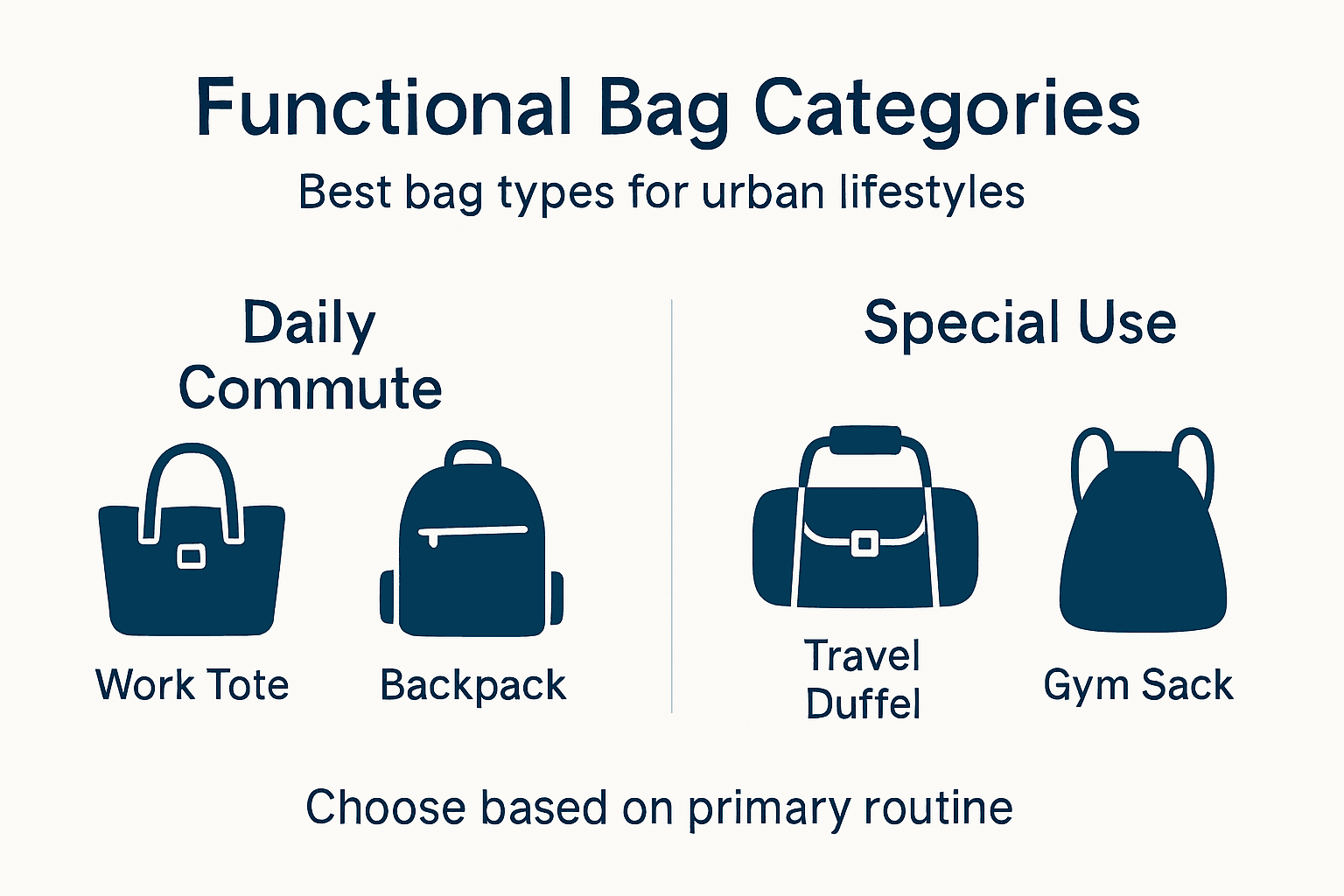
Travel bags represent an entirely different functional category with specialized requirements. Functional bags designed for travel often include features like expandable capacity, anti-theft compartments, and weather resistance to handle the unpredictability of moving between locations. Weekenders work for short trips, offering enough space for a change of clothes, toiletries, and essentials without requiring full luggage. Travel security pouches organize important documents, payment methods, and valuables in accessible yet protected sections. For longer trips, larger travel bags distribute weight efficiently and include multiple compartments to separate clean and used items. The fundamental difference between commuter bags and travel bags lies in expansion capability and weight distribution for extended carrying. Travel bags prioritize comfort during longer wear periods and adaptability to varying climates.
You’ll also encounter specialized functional bags for specific activities and lifestyles. Sport and fitness bags require breathable materials, quick-dry compartments for sweaty clothes, and secure pockets for keys and valuables. Academic bags cater to students with dedicated laptop sections, spacious compartments for textbooks and notebooks, and organizational features that support study habits. Professional guides categorizing dozens of bag types by usage scenarios reveal how design varies dramatically based on context. A camera bag for photographers needs completely different internal organization than a messenger bag for business professionals. A diaper bag for parents requires specific compartments and accessibility features that would seem excessive in a work commuter bag.
The key to selecting the right category for your needs is honest assessment of your primary use case. Most urban professionals benefit from having at least two functional bags. One covers your daily work routine, while another handles weekend travel, gym sessions, or specific hobbies. Some professionals maintain three or more bags for different contexts, rotating them based on their weekly schedule. Rather than searching for an impossible “one bag to rule them all,” embrace the concept that different situations deserve different tools. A bag designed primarily for commuting with a laptop will never work as well for a weekend trip as a bag designed specifically for travel. Once you identify your most frequent use cases, you can select bags that excel in those contexts rather than making compromises across all categories.
When evaluating bags within a specific category, focus on how well the design addresses that use case’s particular challenges. Does a commuter bag have a protected laptop compartment with padding? Does a travel bag include TSA-friendly pockets and expandable sections? Does a sports bag have ventilation to prevent odor accumulation? These category-specific features separate genuinely functional bags from generic options that try to do everything mediocrely.
Here is a comparison of functional bag categories and their unique advantages:
| Bag Category | Typical Use Case | Key Design Benefit | Ideal For |
|---|---|---|---|
| Daily Commuter | Workday essentials | Organized laptop protection | Office professionals |
| Travel Bag | Trips and transit | Expandable, anti-theft features | Frequent travelers |
| Sport & Fitness | Gym and activities | Breathable, quick-dry pockets | Athletes |
| Academic | Study and classes | Spacious, textbook support | Students |
| Specialized (Camera, Diaper) | Niche needs | Custom compartments, easy access | Photographers, Parents |
Pro tip: Identify your top three most frequent activities or destinations in a typical month, then research bag categories specifically designed for those contexts rather than trying to find one universal bag that handles everything.
Safety, Tech, and Modern Material Considerations
Urban professionals face genuine security risks that extend beyond keeping track of your belongings. Pickpocketing, data theft, and weather damage represent real threats to your valuables during daily commutes. Modern functional bags address these challenges through thoughtful integration of security features, smart technology, and advanced materials. The bags you carry today reflect decades of innovation in how designers protect what matters most while maintaining style and usability. Understanding these modern considerations helps you invest in bags that genuinely safeguard your digital life and physical belongings.
Security features have evolved dramatically from basic zippers and locks. RFID-blocking technology protects your payment cards and passport from unauthorized scanning. When you walk through crowded transit systems or busy shopping districts, thieves equipped with RFID readers can extract credit card information from your wallet without ever touching you. Quality functional bags incorporate RFID-blocking materials in dedicated compartments specifically designed for your most sensitive items. Beyond RFID protection, smart bags now integrate GPS tracking, USB charging ports, and anti-theft designs that transform ordinary commuter bags into security-conscious accessories. GPS tracking means you can locate your bag if it’s misplaced or stolen. USB charging ports allow you to power your phone without searching for outlets, keeping your device charged and functional throughout the day. Anti-theft features like hidden zippers, slash-resistant straps, and locking compartments provide peace of mind on crowded transit systems where opportunistic theft remains common. These technological additions don’t compromise the bag’s aesthetic or functionality. They integrate seamlessly into the design, adding genuine value without making the bag look tactical or overly complex.
Material science plays an equally crucial role in modern functional bag design. Water-resistant and water-repellent fabrics protect your electronics and documents from the unpredictability of urban weather. Ballistic nylon, a fabric originally developed for military applications, offers exceptional durability while remaining lightweight. This material resists tears, punctures, and abrasions far better than standard canvas or cotton blends. Reinforced seams ensure the bag maintains its integrity after months of daily use and thousands of transitions through doorways, transit systems, and office environments. Some manufacturers now incorporate sustainable materials without sacrificing durability. Recycled polyester maintains performance characteristics while reducing environmental impact. Cork and plant-based leather alternatives provide aesthetic appeal alongside ethical sourcing, resonating with professionals who prioritize both functionality and sustainability. The material choice directly impacts how long your bag lasts. A well-constructed bag from quality materials might serve you reliably for five to ten years, whereas cheaper alternatives deteriorate within months. This longevity perspective transforms a $300 investment into a cost-effective choice when amortized across years of daily use.
The following table summarizes critical materials used in modern functional bags:
| Material | Durability Level | Water Resistance | Sustainability Impact |
|---|---|---|---|
| Ballistic Nylon | Excellent | High | Non-sustainable |
| Reinforced Canvas | Good | Moderate | Limited |
| Recycled Polyester | Good | Moderate | Eco-friendly |
| Full-Grain Leather | Very high | Low (unless treated) | Low (unless sourced responsibly) |
| Cork/Plant Leather | Moderate | Moderate | Highly sustainable |
The convergence of security, technology, and materials reflects how functional bags have become essential tools rather than mere accessories. Your bag protects irreplaceable items. Your laptop contains months of work and client data. Your phone connects you to your professional network and personal life. Your payment methods represent your financial security. Modern functional bags recognize this reality and integrate features specifically designed to protect these critical components. When evaluating bags, prioritize security features that address your specific concerns. If you commute on crowded public transit, RFID-blocking compartments and anti-theft zippers matter more than GPS tracking. If you travel frequently or work in various locations, water resistance and durable materials should influence your decision more heavily than USB charging ports. The best functional bag combines multiple protective features tailored to your actual lifestyle rather than offering every technology regardless of relevance.
Pro tip: Test the bag’s water resistance by running tap water over it for 30 seconds, checking that moisture does not penetrate the main compartments, before committing to purchase, especially if your commute involves outdoor transit.
Balancing Style, Durability, and Comfort
The tension between looking polished and feeling comfortable shouldn’t exist in a well-designed functional bag. Yet many professionals face this false choice daily. They sacrifice style for practicality or compromise comfort for aesthetic appeal. The reality is that these three elements—style, durability, and comfort—work together when a bag is designed with genuine understanding of urban professional life. This balance isn’t accidental. It requires intentional material selection, construction quality, and ergonomic consideration from the moment a designer sketches the first concept. A bag that excels in only one or two of these dimensions will eventually disappoint you.
Durability forms the foundation that enables both style and comfort to flourish. If your bag falls apart after three months, style becomes irrelevant and comfort matters only briefly. Quality durable bags use reinforced stitching at stress points like handle attachments, zipper areas, and corner seams. Professional bag construction employs bar tacking, a technique where thread is sewn in a box pattern across high-stress areas to prevent unraveling. The material choice determines whether a bag can withstand years of daily use or deteriorates within months. Full-grain leather develops character over time, becoming more attractive with age. High-denier ballistic nylon resists abrasion and tearing far better than standard fabrics. Strong zippers from reputable manufacturers like YKK last through thousands of open-close cycles without jamming or separating. When you invest in a durable bag, you’re not paying more for the same thing. You’re paying for a bag that will still function reliably after 200 days per year for multiple years. This durability directly impacts style because a well-maintained bag that holds its shape and appearance over time maintains its aesthetic appeal far longer than cheaper alternatives that fade, warp, and deteriorate.
Comfort addresses the physical reality of carrying something on your body for hours daily. Padded shoulder straps, breathable back panels, and ergonomic weight distribution transform a bag from something you tolerate into something you barely notice. Wider straps distribute weight across a larger area of your shoulders, reducing pressure points and fatigue. Quality padding cushions the contact area without adding excessive weight. Breathable materials prevent moisture accumulation that leads to discomfort during your commute. Interior smoothness matters more than people realize. Rough seams or protruding zippers can snag your clothing or irritate skin if the bag rests against your body. The bag’s weight distribution should place most mass close to your center of gravity rather than pulling you backward or to one side. These comfort features aren’t luxuries. They directly affect your productivity and wellbeing throughout the workday. An uncomfortable bag leaves you fatigued before your day even begins, whereas a comfortable one disappears into your routine.
Style should emerge naturally from the combination of durability and comfort rather than existing at their expense. A well-constructed bag with quality materials and thoughtful ergonomic design is inherently stylish because it looks intentional and professional. The color selection, proportions, and hardware finishes create personality without compromising function. Well-designed tote bags achieve balance through material choice, construction quality, and ergonomic features that ensure usability without sacrificing aesthetic appeal. Your bag works across multiple contexts when form follows function rather than the reverse. A bag designed for durability and comfort within your urban professional lifestyle automatically looks appropriate for that context. This is precisely where the best functional bags excel. They represent the intersection where quality materials meet thoughtful design, creating pieces that are genuinely useful, inherently beautiful, and comfortable enough to forget you’re wearing them.
When evaluating bags, resist the temptation to prioritize one element over the others. A stunningly designed bag that falls apart quickly wastes your money and time. An incredibly durable bag that looks corporate and feels uncomfortable undermines your work experience. A comfortable bag that looks cheap damages your professional presence. The functional bags worth your investment demonstrate that all three elements strengthen each other. Durability enables long-term style consistency. Comfort supports productivity and confidence. Style reflects that the design addresses real human needs rather than arbitrary fashion choices. This convergence defines what makes a bag genuinely functional rather than merely fashionable or purely utilitarian.
Pro tip: When testing a bag, wear it fully loaded with your typical daily items while standing and walking for at least 20 minutes, paying attention to strap comfort, weight distribution, and whether any hardware or seams irritate your clothing before deciding to purchase.
Discover Bags That Truly Balance Form and Function
If you have ever struggled with disorganized, uncomfortable, or impractical bags during your busy urban days this article highlights the specific challenges you need to overcome to find the perfect functional bag. Key pain points like ergonomic comfort, strategic compartmentalization for quick access, durable materials, and security features are exactly what differentiate a bag that supports your lifestyle from one that adds frustration. At Baggizmo.com we specialize in delivering stylish yet highly functional bags designed to meet the demands of modern professionals who refuse to compromise on comfort or style.
Explore our curated collection where design meets genuine usability in every piece. From smart, protective features covered in our Tech Archives – Baggizmo to thoughtfully crafted aesthetics from our Design Archives – Baggizmo you will find bags engineered for your daily commute or travel needs. Don’t settle for anything less than a bag that organizes your essentials, protects your valuables, and adapts to your routine with ease. Visit Baggizmo.com/shop today to experience the unique blend of innovation and style that turns carrying your bag into effortless confidence. Act now and transform your daily carry into a seamless extension of your professional lifestyle.
Frequently Asked Questions
What are functional bags and how do they differ from regular bags?
Functional bags are designed to balance aesthetic appeal with practicality, offering features that help urban professionals organize their belongings efficiently, protect valuables, and adapt to various daily routines. Unlike regular bags, which may prioritize style or size, functional bags focus on usability across multiple contexts.
What key features should I look for in a functional bag?
When choosing a functional bag, look for features such as strategic compartmentalization for easy organization, ergonomic design for comfort, durable materials for longevity, and security features like RFID-blocking technology to protect your valuables. Additionally, consider the bag’s adaptability to different carrying methods and its water resistance.
How can I assess if a functional bag suits my daily needs?
To determine if a bag fits your daily needs, create a list of items you carry regularly and measure their combined dimensions. Compare this against the bag’s internal space and compartment specifications. Evaluate how easily you can access your items and whether the design complements your work wardrobe and lifestyle.
What types of functional bags are best for daily urban commuting?
For daily urban commuting, bags such as messenger bags, structured totes, and crossbody bags are typically recommended. These types prioritize quick access to items, secure compartments for electronics, and a polished appearance suitable for professional settings.
Recommended
- Role of Bags in Fashion: Beyond Style Statements
- Role of Bags in Travel – Why Smart Design Matters
- 7 Smart Examples of Functional Bags for Urban Lifestyles
- Why Use Crossbody Bags – Function Meets Modern Style
- Τσαντάκι μέσης Bag To Bag – 105 – dermatine bag 3 pockets μαύρο
Need an everyday carry bag?
Meet Baggizmo Crossbody — built for daily essentials, close and secure.


