
17
Jan
Juggling stylish accessories and secure digital payments is a reality for tech-driven professionals navigating life from New York to Singapore. With every tap and transfer, the need for secure digital wallet management grows, blending personal convenience with high-stakes privacy concerns. This guide unpacks the essentials of wallet tracking and digital wallets, spotlighting key features, tool types, and smart strategies to keep your credentials and financial life both practical and protected.
Table of Contents
- Defining Wallet Tracking And Core Concepts
- Main Types Of Wallet Tracking Tools
- How Wallet Tracking Functions In Practice
- Key Benefits And Use Cases For Users
- Potential Risks And Legal Considerations
- Common Mistakes To Avoid When Tracking
Key Takeaways
| Point | Details |
|---|---|
| Understanding Wallet Tracking | Wallet tracking is a digital method for managing personal financial and identity credentials, focusing on secure data storage and user control. |
| Types of Wallet Tracking Tools | Various wallet tracking tools exist, including mobile, web, hardware, software, and blockchain wallets, each serving distinct user needs. |
| Implementing Secure Practices | Prioritize wallets with robust security features, user privacy controls, and multi-factor authentication to enhance digital security. |
| Navigating Risks and Compliance | Be aware of potential legal risks such as unauthorized data access and ensure compliance with regional digital identity regulations to protect user information. |
Defining Wallet Tracking and Core Concepts
Wallet tracking represents a sophisticated digital approach for monitoring and managing personal financial and identification credentials through advanced technological systems. Unlike traditional physical wallet management, this emerging digital strategy focuses on understanding digital wallet characteristics and functionalities across authentication, authorization, and secure data storage mechanisms.


At its core, wallet tracking involves analyzing the complex ecosystem of digital credentials, examining how individuals can securely manage their personal information through digital wallet units and attestations. These systems enable users to control their verified digital credentials from trusted sources, presenting them securely to authorized parties while maintaining robust privacy protections.
The landscape of wallet tracking encompasses multiple dimensions, including technological infrastructure, user experience, and regulatory compliance. Key characteristics include:
- User-controlled digital applications
- Secure credential management
- Privacy-preserving data presentation
- Interoperable credential systems
- Compliance with regional digital identity regulations
Pro tip: When exploring digital wallet solutions, always prioritize platforms offering transparent security protocols and comprehensive user control mechanisms.
Main Types of Wallet Tracking Tools
Wallet tracking tools have evolved significantly, presenting a diverse ecosystem of digital solutions designed to monitor, manage, and secure personal financial and identity credentials. Digital wallet technologies encompass multiple categories, each tailored to specific user needs and technological infrastructures, ranging from mobile platforms to advanced blockchain-integrated systems.
The primary types of wallet tracking tools can be categorized into several key classifications:
- Mobile Wallets: Digital applications enabling smartphone-based transaction tracking and management
- Web Wallets: Browser-based platforms for online financial credential tracking
- Hardware Wallets: Physical devices providing offline security for digital assets
- Software Wallets: Computer-based applications with advanced tracking capabilities
- Blockchain Wallets: Cryptocurrency-focused tools with decentralized tracking mechanisms
Government and enterprise implementations further differentiate wallet tracking tools through control models like custodial, non-custodial, and hybrid systems. These variations determine the level of user autonomy, key management, and data storage protocols, ensuring flexible solutions for diverse digital identity and financial management requirements.
Here is a comparison of digital wallet tracking tool types and their core differentiators:
| Tool Type | Typical Use Case | Control Model | Primary Security Focus |
|---|---|---|---|
| Mobile Wallet | Everyday purchases, transit | Usually non-custodial | Device encryption, biometrics |
| Web Wallet | Online payments, web services | Either custodial/non | SSL encryption, anti-phishing |
| Hardware Wallet | Cryptocurrency cold storage | Always non-custodial | Physical security, air-gapped |
| Software Wallet | Desktop digital asset management | Both custodial/non | Local encryption, firewalls |
| Blockchain Wallet | Decentralized finance, tokens | Smart contract based | Private keys, network consensus |
Pro tip: Always evaluate a wallet tracking tool’s security features, interoperability, and user control mechanisms before implementation.
How Wallet Tracking Functions in Practice
Wallet tracking represents a sophisticated technological process that leverages advanced algorithms and blockchain analysis to monitor digital transactions and user behaviors. Blockchain analysis techniques enable comprehensive transaction mapping by examining public ledger information, tracing wallet addresses, and identifying complex activity patterns across digital ecosystems.
The practical implementation of wallet tracking involves several critical mechanisms:
- Real-time transaction monitoring
- Address correlation and entity identification
- Suspicious activity detection
- Cryptographic verification of transaction authenticity
- Pattern recognition through machine learning algorithms
In the European Digital Identity framework, wallet tracking operates through a robust system of cryptographically secured attestations. Secure wallet units facilitate seamless authentication and authorization, allowing users granular control over their digital identity while maintaining stringent security protocols across public and private service interactions.

The following table highlights the impact of wallet tracking features on both users and organizations:
| Feature | User Impact | Organization Impact |
|---|---|---|
| Real-time monitoring | Instant fraud alerts | Faster threat detection |
| Cryptographic verification | Confirms transaction authenticity | Reduces risk of fraudulent access |
| Privacy control | Selective data sharing | Regulatory compliance improvements |
| Address correlation | Easier identity management | Enhanced audit and analytics |
Pro tip: Always configure your wallet tracking tools with multi-factor authentication and regularly review transaction logs for enhanced digital security.
Key Benefits and Use Cases for Users
Wallet tracking technologies offer transformative advantages that extend far beyond simple transaction monitoring, providing users with unprecedented control and convenience in digital interactions. Digital identity management enables individuals to securely access a wide range of public and private services while maintaining robust privacy protections.
Key benefits for users include:
- Simplified identity verification processes
- Secure digital document signing
- Streamlined access to government and private services
- Enhanced privacy control mechanisms
- Reduced bureaucratic friction in administrative interactions
The practical applications of wallet tracking are remarkably diverse. European Digital Identity Wallet implementations demonstrate real-world use cases such as age verification, health record management, cross-border service authentication, and universal digital identification. These technologies empower users by providing granular control over personal data sharing, ensuring that individuals can selectively disclose information while maintaining comprehensive security standards.
Pro tip: Always review and understand the specific privacy settings of your digital wallet to maximize personal data protection and control.
Potential Risks and Legal Considerations
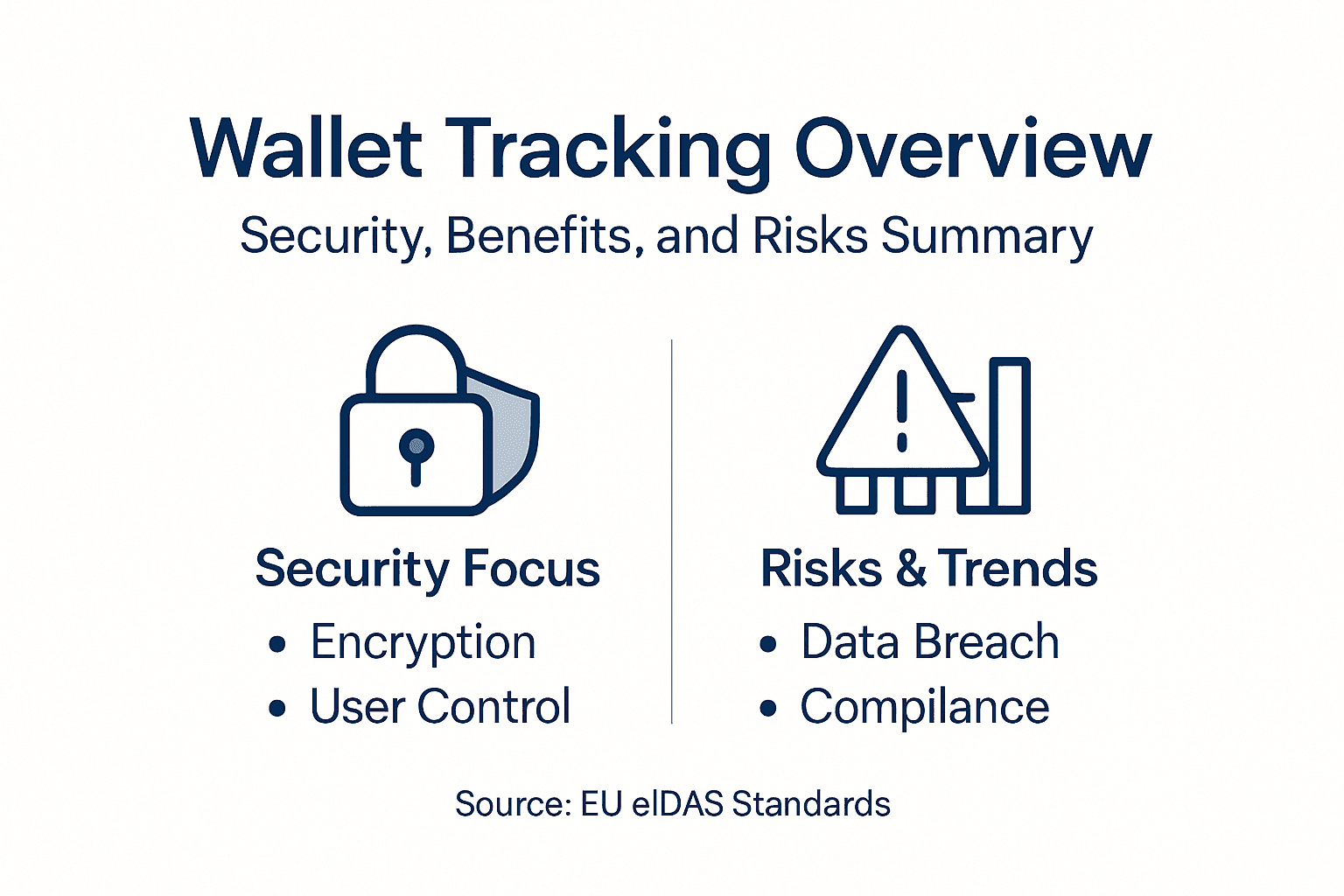
Wallet tracking technologies, while innovative, introduce complex legal and security challenges that demand careful navigation. Digital wallet legal frameworks highlight significant potential risks including unauthorized data access, privacy breaches, and potential fraud mechanisms that could compromise user information.
Key potential risks encompass:
- Unauthorized personal data exposure
- Identity theft vulnerabilities
- Technical system exploitation
- Cross-border data sharing complications
- Inconsistent regulatory compliance
European eIDAS 2.0 regulatory standards represent a comprehensive attempt to mitigate these risks by establishing uniform certification processes and interoperability requirements. These regulations aim to create a robust legal environment that balances technological innovation with stringent user protection mechanisms, addressing emerging digital identity management challenges across international jurisdictions.
Pro tip: Regularly audit your digital wallet’s security settings and maintain updated knowledge of current privacy regulations to minimize potential legal and security risks.
Common Mistakes to Avoid When Tracking
Wallet tracking demands meticulous attention to detail and strategic implementation to prevent critical vulnerabilities. Digital wallet management challenges reveal numerous pitfalls that can compromise system integrity and user trust, making proactive error prevention essential for robust digital identity protection.
Key mistakes users and organizations must avoid include:
- Inadequate security configuration
- Neglecting regular privacy audits
- Insufficient user authentication protocols
- Poor cryptographic key management
- Overlooking interoperability requirements
- Centralized control dependencies
Security and fraud prevention strategies emphasize the critical balance between transparency and user anonymity. Successful wallet tracking requires collaborative approaches that integrate developer insights, regulatory frameworks, and user-centric design principles. By understanding potential vulnerabilities and implementing comprehensive safeguards, organizations can create more resilient and trustworthy digital wallet ecosystems.
Pro tip: Implement multi-factor authentication and conduct periodic security assessments to proactively identify and mitigate potential tracking system vulnerabilities.
Secure Your Digital and Physical Assets with Style and Confidence
Understanding wallet tracking security, risks, and trends highlights the importance of protecting your personal data and digital identity while maintaining control and privacy. The article points out concerns like unauthorized access, data breaches, and the need for privacy-preserving tools. If you value both high-tech security and practical style, integrating smart, reliable solutions into your everyday life is essential.
Explore the cutting-edge options at Tech Archives – Baggizmo where you will find smart wallets designed to combine advanced safety features with modern design crafted in the EU. These wallets help you keep your credentials secure while offering functional convenience. For a broader range of innovative bags and accessories that complement your digital lifestyle, visit our shop at https://getbaggizmo.com/shop. Stay ahead in managing your identity securely without sacrificing style.
Ready to upgrade your personal security with smart, trendy products? Discover exclusive releases and pre-orders today at FashTech Archives – Baggizmo and make every transaction safer and smarter.
Frequently Asked Questions
What is wallet tracking?
Wallet tracking is a digital approach for monitoring and managing personal financial and identification credentials, focusing on secure data storage and user control in digital wallets.
What are the main types of wallet tracking tools?
The primary types of wallet tracking tools include mobile wallets, web wallets, hardware wallets, software wallets, and blockchain wallets, each serving different user needs and security models.
How does wallet tracking function in practice?
Wallet tracking functions through mechanisms like real-time transaction monitoring, cryptographic verification, and suspicious activity detection, utilizing advanced algorithms and blockchain analysis.
What are the potential risks associated with wallet tracking?
Potential risks of wallet tracking include unauthorized data exposure, identity theft, technical system exploitation, and complications with cross-border data sharing.
Recommended
- Wallet Safety Explained: Protecting Your Digital Assets
- Role of Wallets in Daily Life – Modern Convenience & Security
- Why Invest in Smart Wallets: Security Meets Style
- NFC Wallets Explained: Secure Payments and Features
Need an everyday carry bag?
Meet Baggizmo Crossbody — built for daily essentials, close and secure.


